Area guide · Fathom Five
The shipwrecks at Big Tub, and how to actually see them
The first time we put visiting family on the boat across the Sweepstakes we picked a 2 p.m. sailing on a breezy August Saturday. They looked at some chop through the glass, said "lovely" and asked about lunch. The wreck is right there in a few meters of water and you can miss it completely, because seeing it is a question of light and wind more than anything else. Here is where the wrecks are, the 2 ways to look at them, the 1 that does not work and the hour that makes the difference.
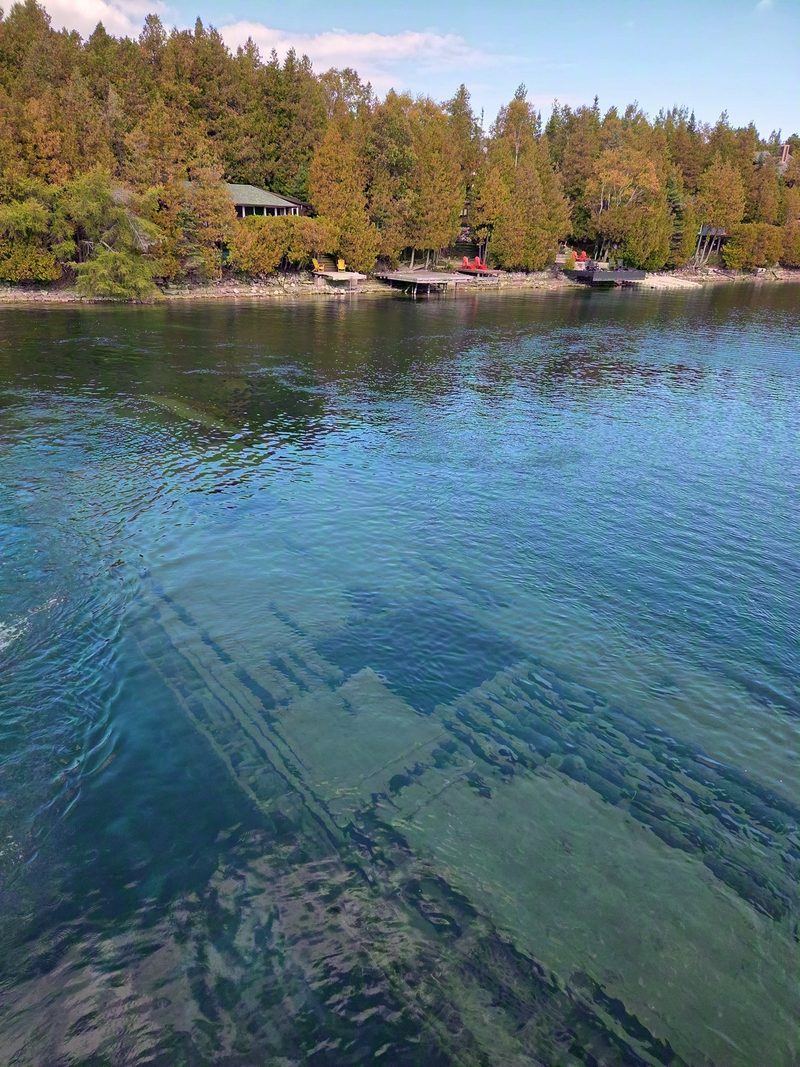
What is actually down there
The water around Tobermory is protected as Fathom Five National Marine Park, Canada's first national marine park, and it holds more than 20 shipwrecks from the schooner era. Cold fresh water is the reason they are still recognizable as ships rather than as piles of timber. Most of them need a boat, a tank and a certificate. 2 of them do not.
- The Sweepstakes is the one everybody comes for. A 2-masted schooner, damaged off Cove Island in 1885 and towed into Big Tub to be repaired, where she sank instead. She is close to intact, hull and bow and windlass, and she lies shallow enough that her whole outline reads from the surface on a calm day. She is one of the best preserved schooners in the Great Lakes and by a distance the easiest to visit.
- The City of Grand Rapids is a passenger steamer that caught fire in 1907 and burned to the waterline. She sits nearby in even shallower water, less complete and less photogenic, which is why nobody mentions her and why she is often the one you can see best.
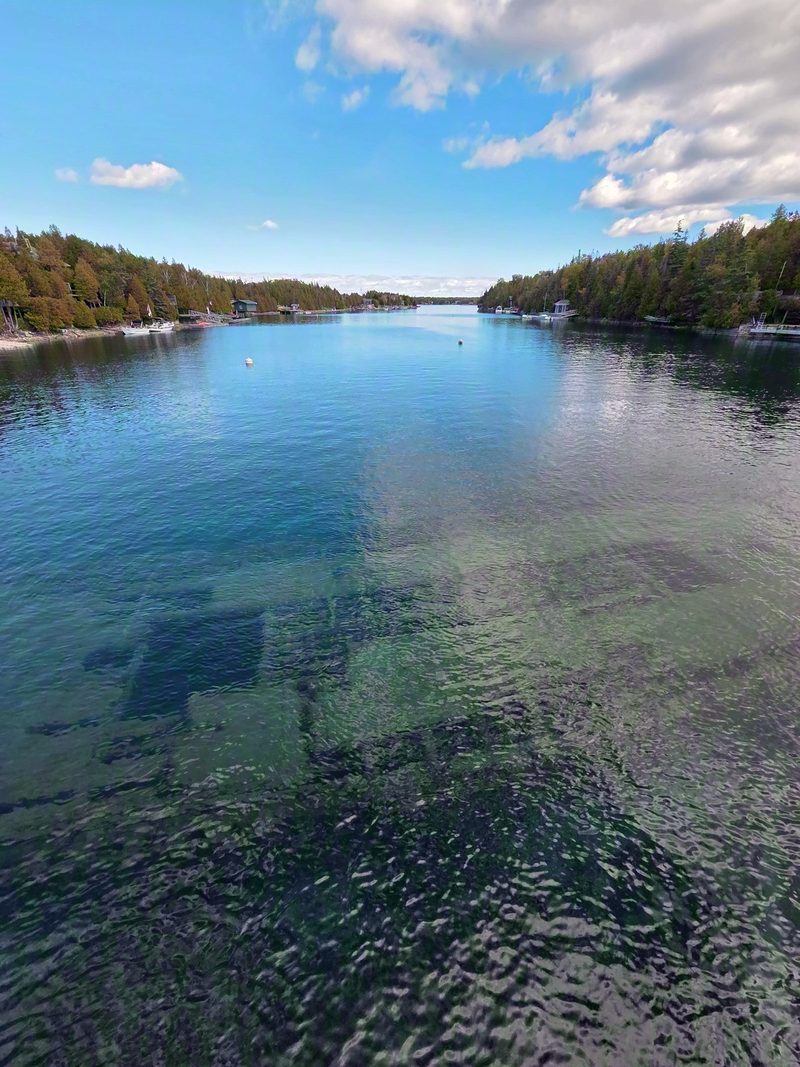
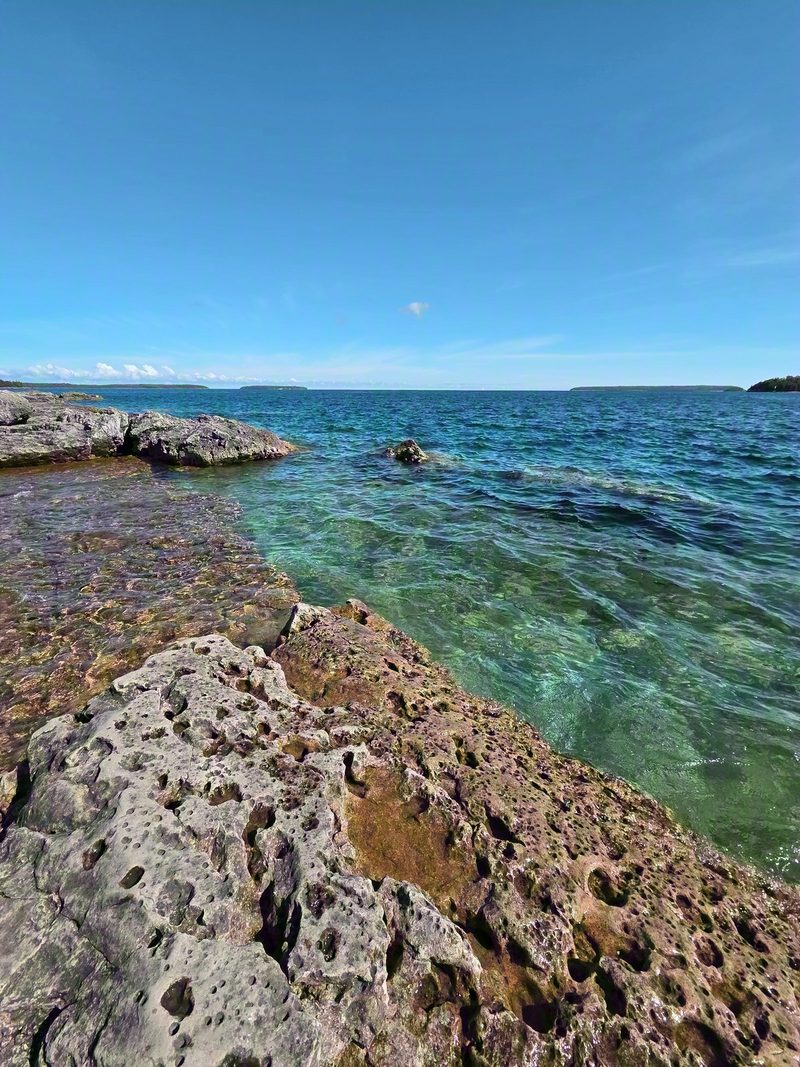
The 2 ways to see them, and the 1 that does not work
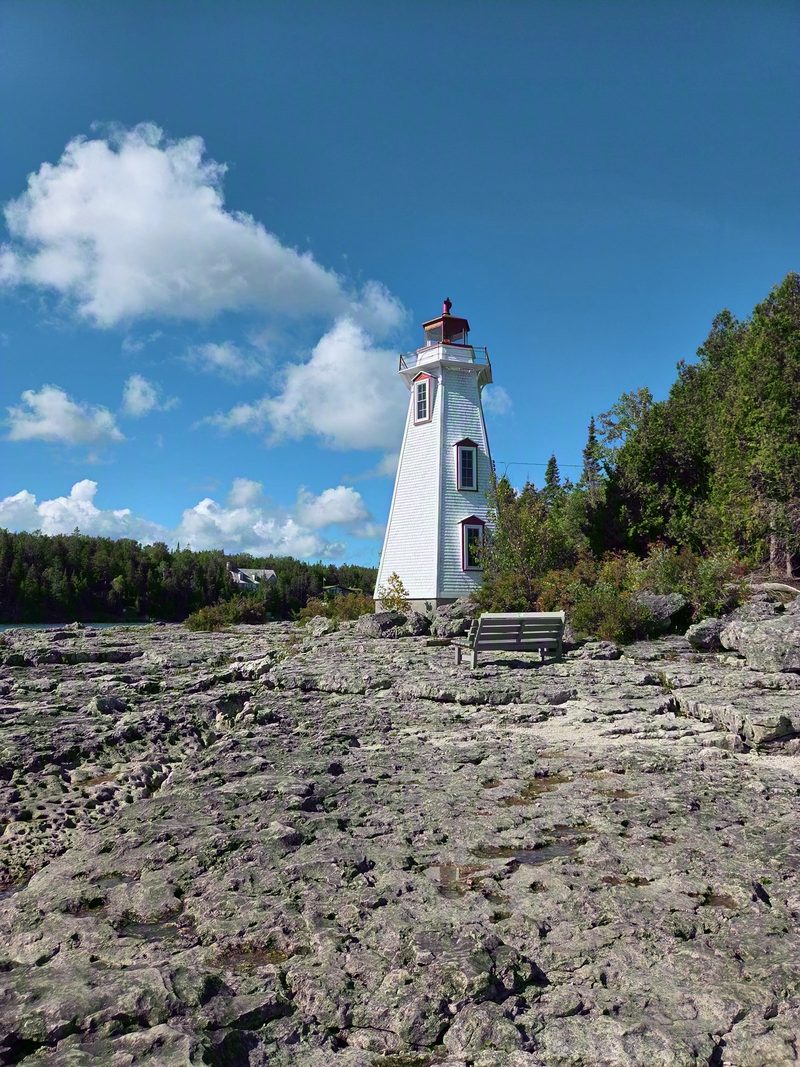
Not from shore, and knowing that saves you the drive. The Sweepstakes lies about 50 m off the head of the harbour in 6 m of water, and the land along Big Tub Road is cottages and private docks the whole way, with no public access to the water. The one piece of public ground is the lighthouse point at the harbour mouth, a full harbour away from the wrecks, so there is nowhere on land to stand and see one. Do not solve this with somebody's dock. The point itself is still a lovely short walk with a guide of its own: Big Tub Lighthouse.
1. Glass bottom boat. The tour boats leave Little Tub Harbour and cross directly over both wrecks on the way out, so if you have already booked the island you have already booked the wrecks. The deck goes quiet when the Sweepstakes slides under the glass. Operators, timing and booking are all in our Flowerpot Island guide, which is where that trip belongs. If a full island day is more than you want, both operators also sell a shorter cruise that crosses the wrecks and turns around at the island without landing. Blue Heron calls it the Stay Aboard Scenic Cruise and Bruce Anchor the Scenic Stay-Aboard Cruise, and both run about 90 minutes with the wrecks in the first few of them.
2. Snorkel or dive, which needs paperwork. Fathom Five is a bucket list dive destination and the Big Tub wrecks are shallow enough to be just as good on a snorkel. Everyone getting in the water at the wreck sites has to register with Parks Canada first, and access rules change season to season, so check before you pack the fins. The water is cold enough that a wetsuit is not optional for most people, even in August. The dive shops in the village rent gear and give current advice for free.
The rest of the story
The lightkeepers, the fishing families and what the schooner trade actually did to this harbour are told at the St. Edmunds Township Museum just south of the village. It is a good rainy hour and it is 5 minutes off Highway 6.
When to go
- Early morning, always. The harbour is glass before the wind finds it, and low sun behind you cuts through the surface instead of bouncing off it.
- After a calm night beats a calm hour. It takes a while for the harbour to settle once it has been stirred up.
- Polarized sunglasses turn a grey ripple into a ship from the boat deck.
- September and October are the clearest water of the year and the parking is easy. The photograph at the top of this page is from a morning in early October.
- Skip it in a chop. There is no version of a windy afternoon where you see the wreck properly, and the light will not save you.
- Winter is not wreck season. Snow, ice and a road that stops being plowed short of the end make this a lighthouse trip rather than a wreck one between November and April. The lighthouse guide covers going out there in the cold.
Leave them alone
These wrecks are protected, and they are fragile in a way that does not look fragile. Standing on a hull, pulling at a timber for a photograph or anchoring across one does damage that lasts longer than anyone's holiday. Wood that has survived 140 years underwater comes apart quickly once people start handling it. Look all you like, from as close as the rules allow, and touch nothing.
If the maritime thread is what draws you, the MS Chi-Cheemaun is the same story still sailing, and she leaves from Little Tub, the harbour next door.
Diving, snorkeling and boating rules inside Fathom Five change season to season. Confirm on the Parks Canada Fathom Five page before you plan to get in the water. Trust them over any blog, ours included.
Keep planning
Where to go next
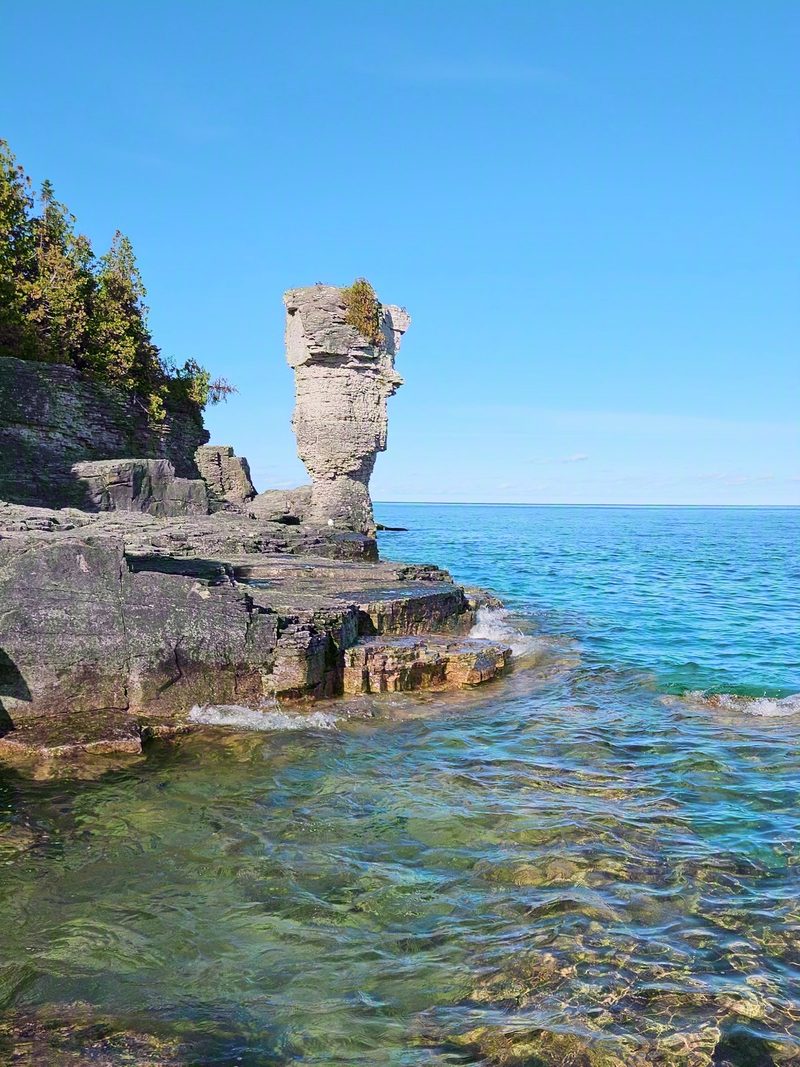
Flowerpot Island
The boat that crosses the wrecks is going somewhere. Here is how to make a day of it.
Keep reading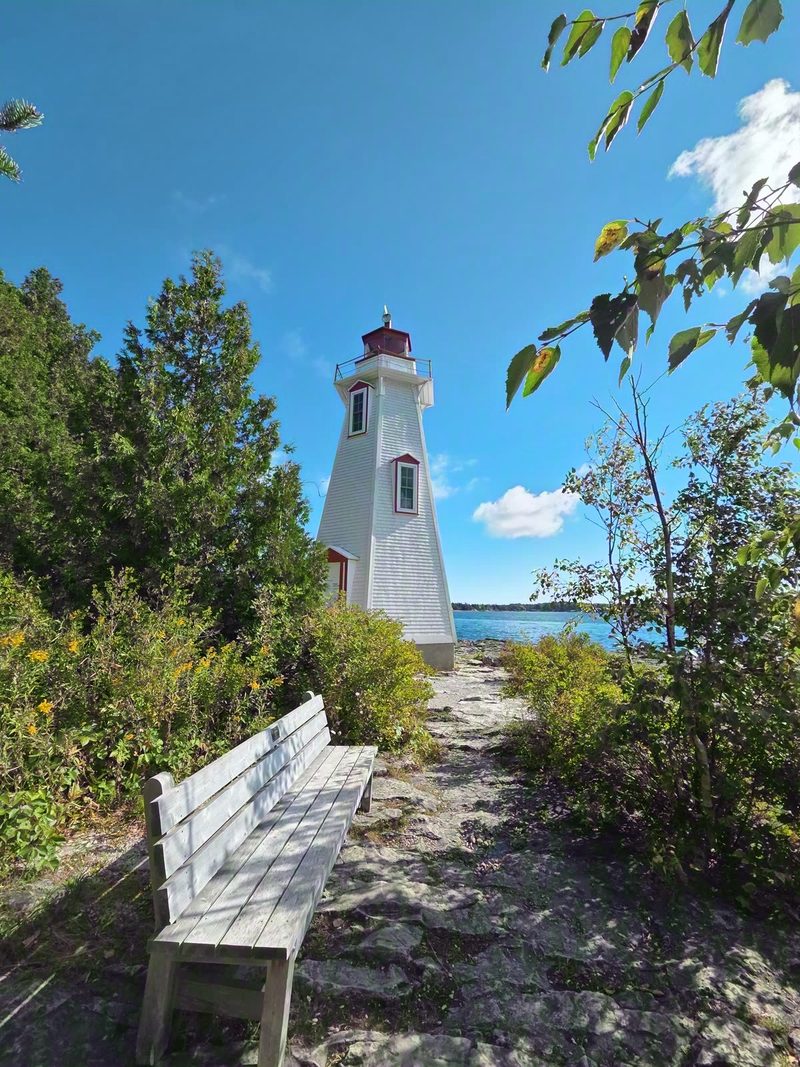
Big Tub Lighthouse
The tower above the wrecks, at sunset in summer and on foot through snow in winter.
Keep reading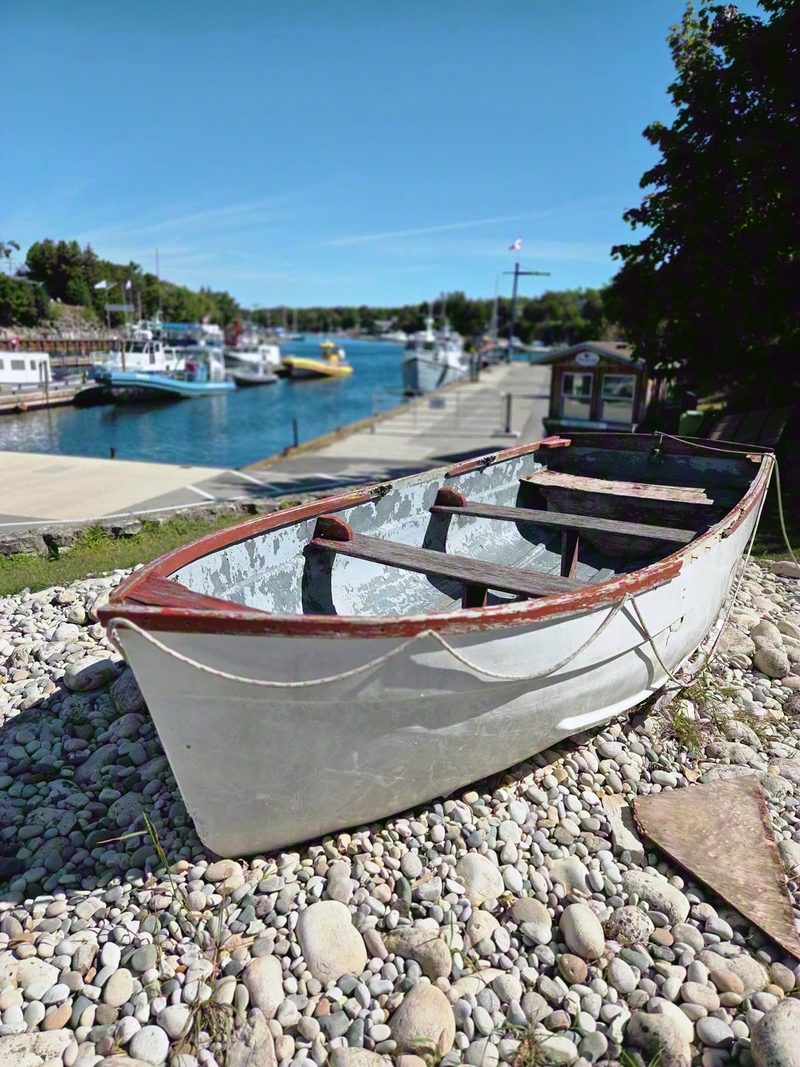
Little Tub Harbour
The harbour next door, where the boats leave from and the village happens.
Keep reading