Area guide · On the water
Wind decides the day
Most people launch at 2 in the afternoon, because that is when everybody is finally ready. It is the worst hour of the day to be on this water and the reason so many paddles end with an arm-burning slog back. The peninsula has 2 coasts facing opposite directions, which means that on almost any day one of them is flat. Reading which one, and knowing why the flat side is sometimes the dangerous side, is the whole skill out here.
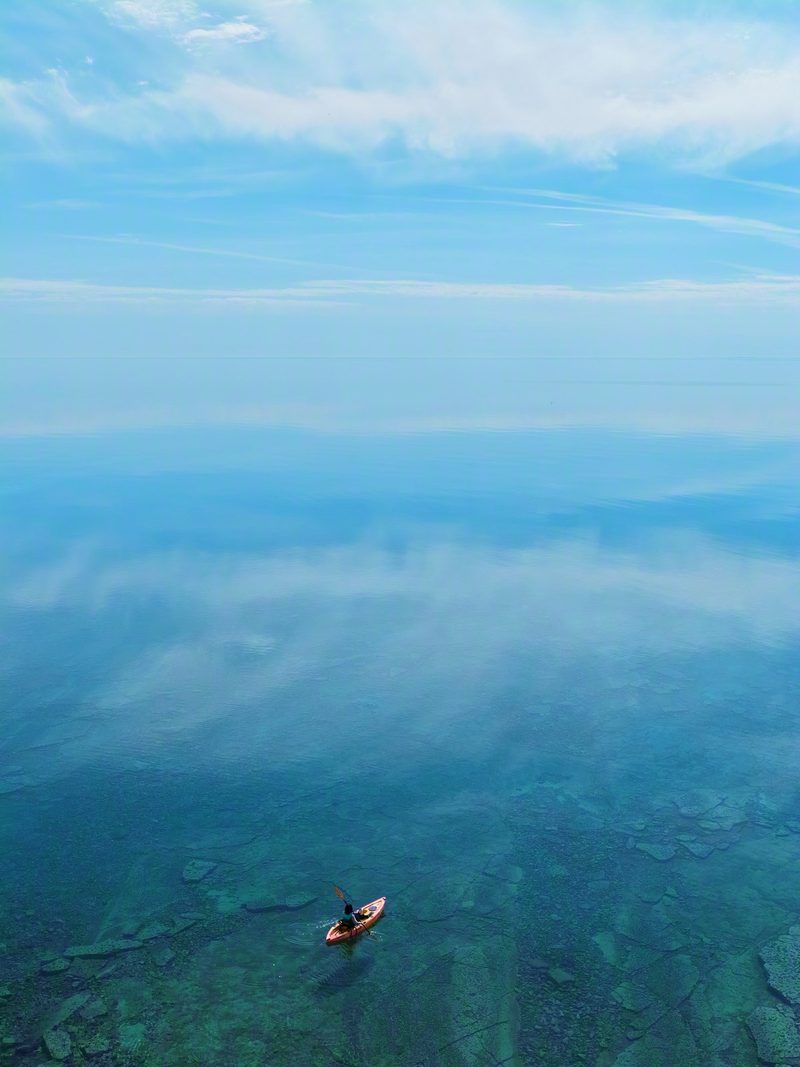
Pick your shore by the wind direction
Lake Huron is on the west side of the peninsula. Georgian Bay is on the east. They are the same body of water and they behave nothing alike on a given afternoon, because whichever one the wind has crossed is the rough one.
- A west wind has run the full width of Lake Huron before it reaches you. The Huron shore builds. The Georgian Bay side, up at the Tobermory end, sits in the lee and goes quiet. This is a Little Cove, Halfway Log Dump or Indian Head Cove day.
- An east wind does the reverse. Georgian Bay stacks up against the cliffs and the Huron side lies down. That is the day for Singing Sands and the west-facing shores.
- Read the direction before the speed. 20 km/h from the right quarter is a pleasant day. 15 from the wrong one sends you home.
Check the marine forecast rather than the town forecast, because the town forecast is describing a parking lot. Environment Canada publishes separate ones for Georgian Bay and for northern Lake Huron, and on most mornings they read nothing alike. That is not the forecasters arguing. They are describing 2 different bodies of water with the wind crossing them from opposite ends, which is exactly the information you came for.
The flat side can be the dangerous side
This is the part almost nobody is told. When the wind is blowing off the land and out over the water, the shoreline looks perfect. No chop, no whitecaps, no noise. What you are looking at is an offshore wind, and it is pushing everything on the surface steadily away from land, including you.
Parks Canada says it plainly for this coast: offshore winds can blow inflatables far out. An inflatable paddleboard, a kayak sitting high on the water, a floating mattress and a child on a pool toy are all sails. You will not notice on the way out, because the wind is helping. You notice when you turn around.
- Test it before you commit. Paddle 100 m straight upwind first. If that is hard work, the return leg from a kilometre out is not happening.
- Stay parallel to shore rather than heading out from it. Every point in the paddle should be a short swim from land.
- Inflatable toys belong in shin-deep water on a calm day, and nowhere else on this lake.
- Rescue is slow here. Parks Canada warns that emergency response can take an hour or more along this shoreline, and that cell reception is unreliable across much of it.
The 2 hours that are always best
On a settled summer day the wind follows a pattern. It is lightest around first light, builds through the late morning as the land warms past the water, peaks in the middle of the afternoon when that gap is widest and then falls away as the sun goes down and the gap closes. A weather system moving through overrides the whole thing, which is why the direction still gets read before the speed.
So the good paddling is early and late, and the middle of the day belongs to swimming and lying on a warm rock. Dawn is the better of the 2, because the water has had all night to settle and the light is doing something extraordinary over the cliffs. Sunset is the easier sell to everyone else in the house.
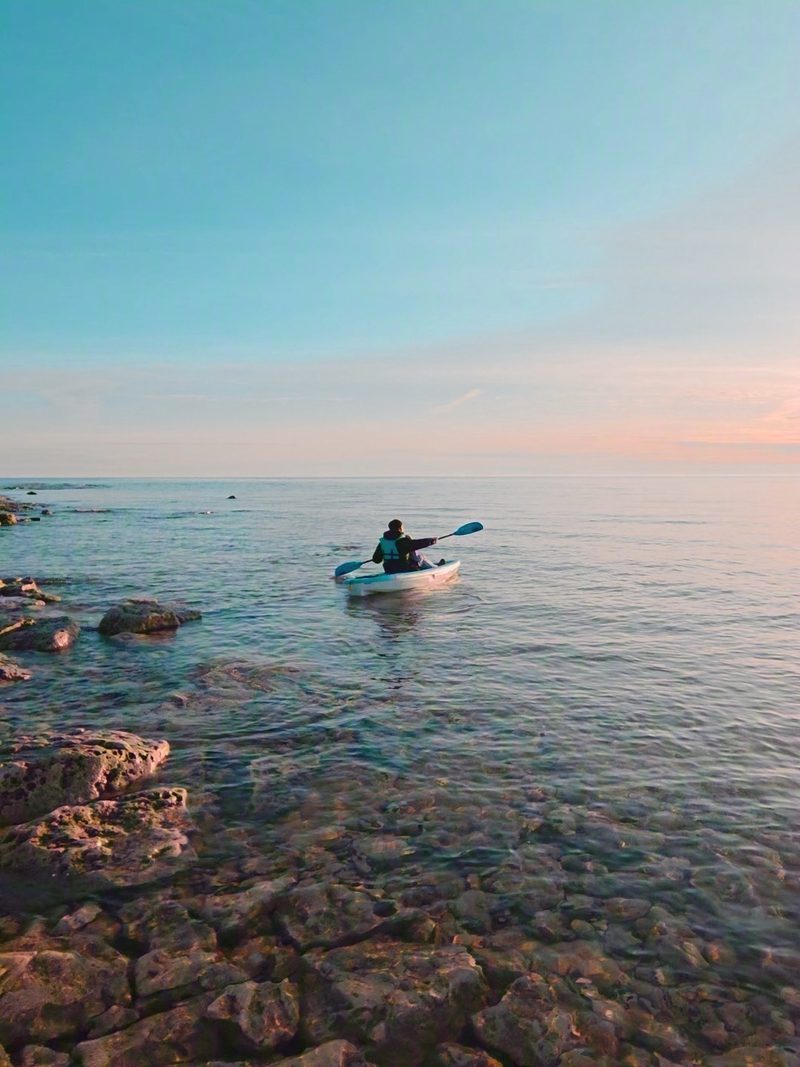
The water is colder than it looks
Clear water reads as warm water and it is not. The Georgian Bay side rarely climbs above about 16°C even in July and August. The shallow Huron flats at Singing Sands are a different story and can reach real swimming temperature by late summer, which is why that beach is the answer with small children.
Cold water does something specific to a body and it is nothing to do with willpower. The Canadian Safe Boating Council teaches it as 1-10-1: about 1 minute of cold shock, when you gasp and cannot control your breathing, then about 10 minutes of useful movement before your hands and arms stop working, then roughly 1 hour before hypothermia takes consciousness. The first minute is what drowns people, and a life jacket is what carries you through it, because it keeps your face out of the water while you have no say in the matter.
The rest of the shoreline advice from the park is short and all of it is earned:
- The bottom drops away fast, even off sand.
- Stay out when the waves are up. On this coast a wave does not just knock you over, it puts you into limestone.
- Wet limestone is slicker than it looks, and most injuries here happen on the walk in rather than in the water.
- Cliff jumping is illegal in the national park. The injuries are dislocations, fractures and concussions, and there have been deaths.
- There are no lifeguards in the national park. Parks Canada says it plainly: nobody is on duty in any area and everyone who swims does so at their own risk. Not at the Grotto, not at Singing Sands, not at Cyprus Lake. The municipal beaches are not supervised either, as far as we have ever seen.
- Children are supervised at all times, in the water and beside it. The bottom drops fast, the wet rock is slippery and nobody else is watching.
The shore itself is rocky, nearly everywhere
The 2 coasts are rocky in 2 different ways, so know which one you have booked.
Georgian Bay is the escarpment side. Waves coming off open water throw rock up into banks of rounded white cobble, which is what Little Cove, Halfway Log Dump and Indian Head Cove all are. It shifts underfoot, it holds the afternoon heat and it goes straight down into deep water.
Lake Huron is the flat side. The ice planed this shore level, so what you get is bare limestone pavement running out under the water in shelves, with scattered boulders sitting on top of it and the bottom dropping away slowly rather than all at once. It is not smooth. The rock is rough, seamed and edged, and it is slick where it is wet.
The sandy exception on either coast is the Singing Sands area, which is why that beach carries the small children. Everywhere else, wear water shoes. On cobble they stop the stones bruising your feet. On limestone they are the difference between walking in and going down on your hands.
Launching a kayak off either shore takes more care than a beach launch. Float the boat fully before anyone sits in it, walk it out until it rides free and step in from the side rather than dragging off the rock. A loaded kayak grounded on limestone sticks, and hauling it loose is how hulls get scratched and fins get bent. Coming back in, do the same in reverse: out of the boat early, walk it the last stretch.
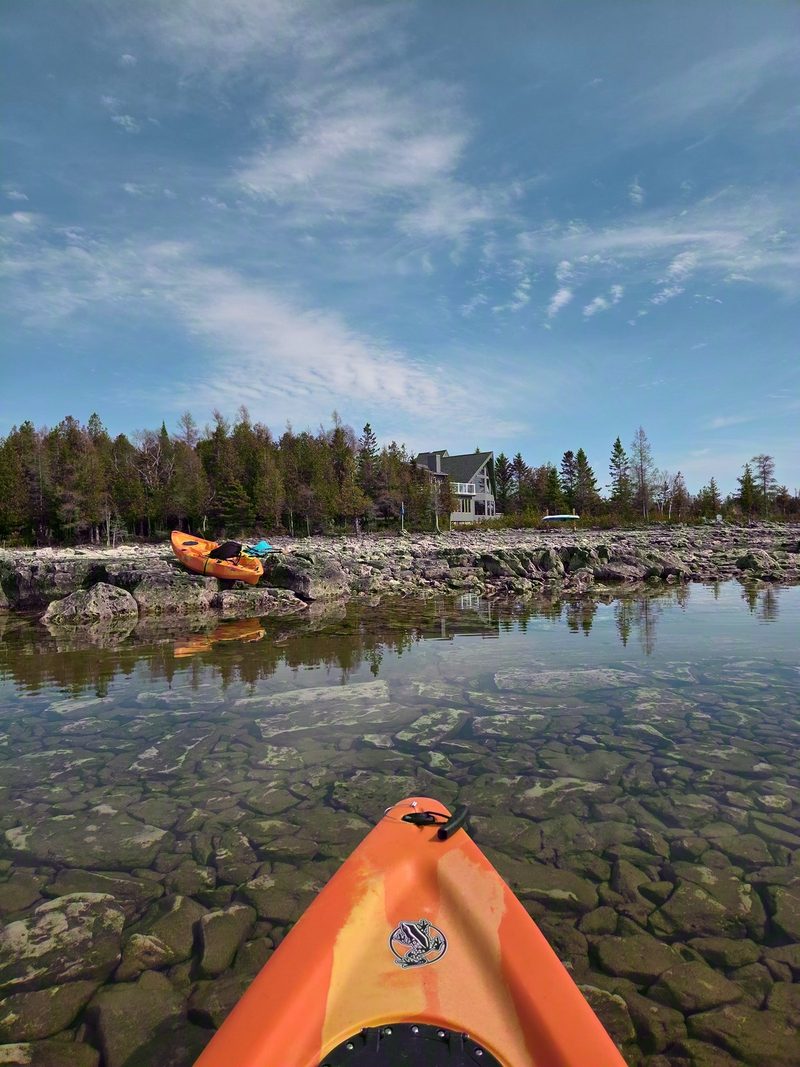
Getting on the water
Because of the shape of the peninsula, a large portion of the cottages up here are lakefront, and the easiest launch is the shore you are staying at. Kayaks may be provided by the cottage, or rented from outfitters in town who may deliver to cottages and collect the boats at the end of the stay. Just ask.
If your place is not on the water, the municipality runs public launches on both coasts and on 2 inland lakes, which means the wind rule above still gets a say. Pick the side the morning is being kind to.
- Georgian Bay side, for a west wind: Little Tub Harbour in Tobermory, the official put-in for Fathom Five, with a $15 fee at the Harbour Master's Office. Kayaks are welcome, but read the warning further down before you use it: the mouth of Little Tub is working water and a paddleboard is close to invisible from a wheelhouse. Further down the coast, the government dock at Dyers Bay, Rush Cove off Lemcke Road and the Lion's Head marina, also $15.
- Lake Huron side, for an east wind: the Burma Road launch at the west end of Burma Road, open until 10 p.m.
- Inland, for a day the big lake says no: Cameron Lake off Beach Road, for canoes, kayaks and small boats only, and Miller Lake, the biggest inland lake on the peninsula.
2 places look like launches and are not: the beach at Dunks Bay, where boat launching is not permitted, and the Big Tub lighthouse point, which Parks Canada lists as a restricted area.
Check the boat before you check the weather
Rental and travel gear lives a hard life, and an inflatable that was fine last August may not be fine now. 5 minutes in the driveway is better than 5 minutes offshore.
- Inflate fully and leave it 20 minutes. A slow seam leak shows itself while the board is still on the grass.
- Check the fin and the fin screw. A fin that falls out mid-paddle turns a board into a raft that only goes downwind.
- Look for the drain plug on a sit-on-top kayak and make sure it is in.
- Wear the leash on a board, and take it off in moving water. On open lake it keeps the board with you, which is the flotation you are actually relying on.
- Cold water changes what you wear. In June, dress for falling in rather than for the air temperature.
What Transport Canada requires you to carry
Not suggestions. These are the legal minimums for human-powered craft, and they are checked.
- A Canadian-approved PFD or lifejacket of the right size for every person aboard. Carrying one satisfies the letter of it. Wearing it is what actually matters, since most people who die in boating incidents were not wearing theirs.
- A sound signalling device, which means a pealess whistle on your PFD, not on a shelf at home.
- A buoyant heaving line at least 15 m long. Paddleboards and sealed-hull sit-on-top kayaks are exempt from this one as long as everybody aboard is wearing their PFD.
- A bailer or manual pump for craft that can hold water.
- A watertight flashlight if you will be out after sunset or in poor visibility. Confirm the current list in the Transport Canada Safe Boating Guide.
Where not to be
- The mouths of Big Tub and Little Tub. Tour boats, dive boats and the Chi-Cheemaun all use that water, and a paddleboard is close to invisible from a wheelhouse. Launching at the Big Tub lighthouse point is not permitted, and the wrecks are better seen from a glass-bottom boat or a mask than from a paddleboard.
- Above the dive sites in Fathom Five, where boats are working and divers surface.
- Anywhere you cannot see your car when you look back, on a first outing in a new place.
All of which sounds like a lot of rules for a paddle. It comes down to 3 habits: look at the wind direction before you pick a shore, go out early or late rather than at 2, and wear the life jacket you already own. Those 3 cover almost every situation this coast produces.
The fourth habit is free. No forecast will tell you what your own bay is doing this morning, so look at the water before you load the car. 10 seconds of that saves an hour of driving to a shore that was never going to be calm.
Before you launch: conditions and equipment rules change, so check the Environment Canada marine forecast, the Parks Canada water safety page and the Transport Canada Safe Boating Guide on the day. Trust them over any blog, ours included.
Keep planning
Where to go next
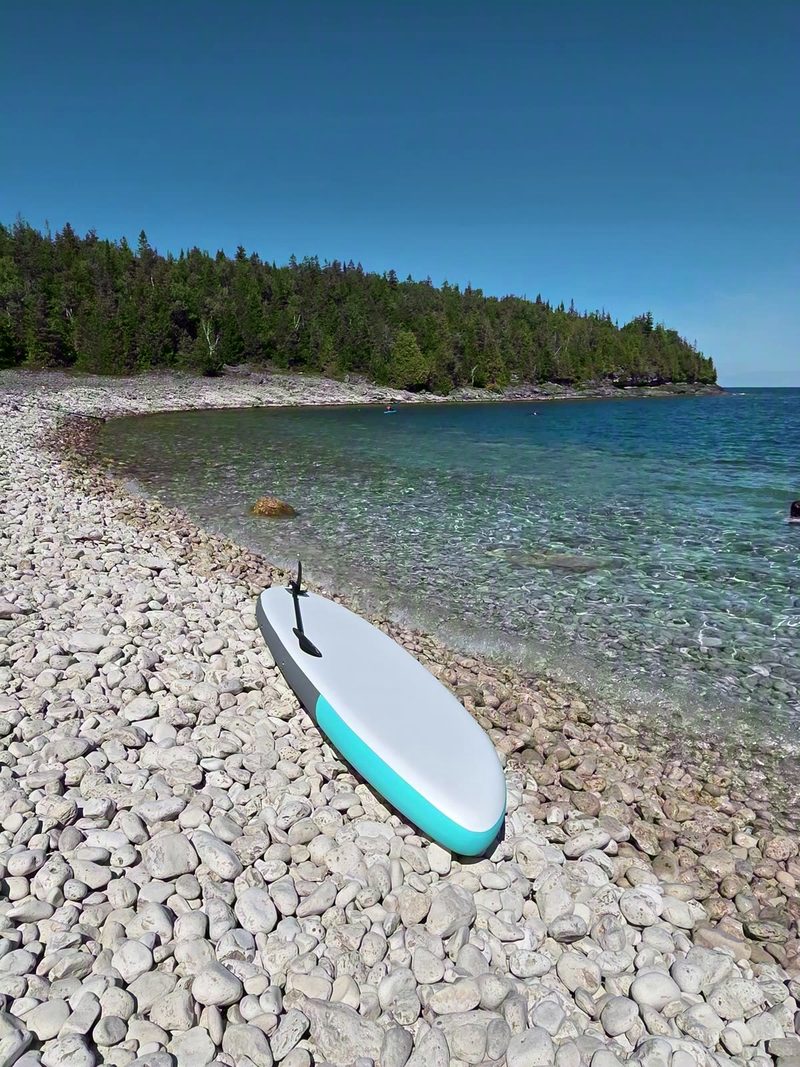
Little Cove
The easiest launch on the Georgian Bay side, 300 m down a paved path that is steeper coming back.
Read the guide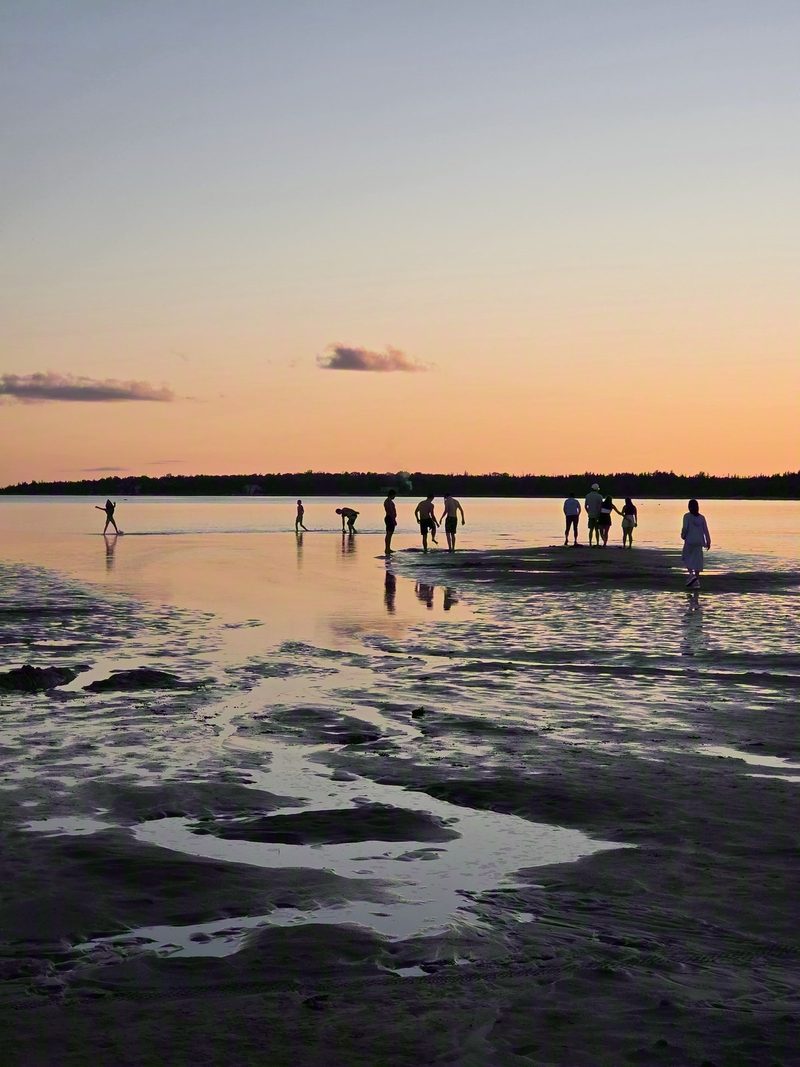
Singing Sands
The Huron side answer on an east wind, and shallow water warm enough for small children.
Read the guide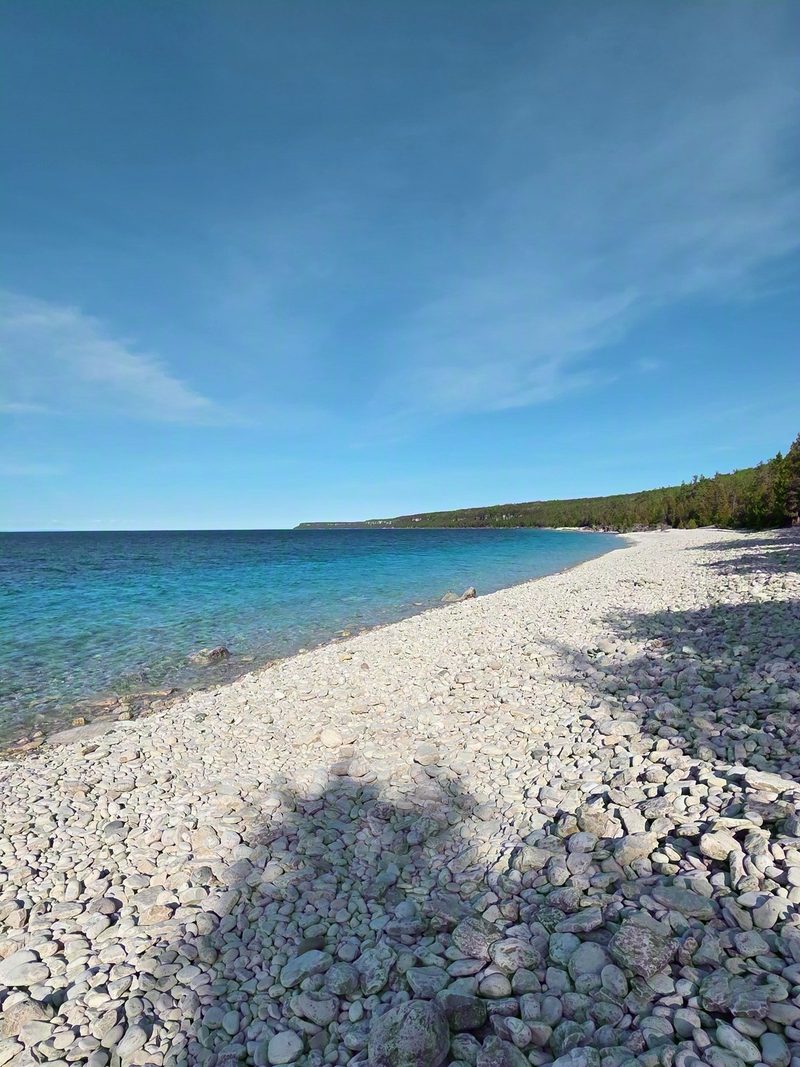
Halfway Log Dump
A long cobble beach that sits in the lee on a west wind, and you can carry a light board the 1 km in.
Read the guide