Area guide · Rules and safety
Almost everywhere you picture a fire, you cannot have one
The image people arrive with is a fire on a cobble beach with the water going dark in front of it. It is a lovely picture and it is not allowed anywhere on this shoreline. There are 2 completely separate rule sets up here, one for the national park and one for everywhere else, and they catch out different people in different ways. The whole thing takes 5 minutes to understand and saves a fine, an argument with a warden or something far worse in a cedar forest in August.

Inside the national park: campground fire pits only
Bruce Peninsula National Park allows fires only in the designated fire pits, and those exist at the Cyprus Lake Campground. That is the entire list.
- No fires at the day-use areas. Not at the Grotto, not at Indian Head Cove, not at Halfway Log Dump, not at Singing Sands. The beaches you would most want a fire on are the ones where it is illegal.
- No fires in the backcountry. Stormhaven and High Dump have no campfires at all. If you are hiking in to sleep, you are cooking on a stove.
- Firewood is bought, not brought. Parks Canada requires it to be purchased at the campground or from businesses on the Bruce Peninsula. At the Cyprus Lake Campground a fire permit is added automatically for each night of your stay and locally sourced firewood comes with it.
- Nothing after 11 p.m. Feeding or stoking a fire past 11 is prohibited.
- Do not gather dead wood. Fallen branches are habitat and soil, and collecting them in the park is not allowed.
Outside the park: a free permit, and you need it
Everywhere else on the Northern Bruce, from a cottage yard to a private lot, open air burning is governed by the Municipality of Northern Bruce Peninsula under By-Law 2019-47, and a permit is required all year. That includes an ordinary backyard campfire.
- It is free, and you get it online through the municipality's burn permit system.
- Summer takes its own permit. The campfire permit covers the beginning of May to the end of October, and once it is registered you can light a fire without doing anything else first.
- Outside that window the fire gets registered with the municipality by phone before you light it. Read the conditions on whichever permit you are issued rather than assuming.
- Campfires in campgrounds are exempt, because the campground holds the permit.
- Fire bans happen and they are not rare. The municipality posts a fire danger rating and lifts or imposes bans as the season dries out. Check it the day you plan to burn, not the week you booked.
- Only clean wood. Burning anything else needs the Fire Chief's approval, which in practice means do not put your garbage on the fire.
- Someone stays with it. The bylaw requires fires to be supervised at all times and fully extinguished before you leave.
If you are renting, the permit is the property owner's responsibility and you should ask about it before you arrive rather than assume the fire pit in the photographs is a permitted one. It is on the short list of questions in our guide to renting a cottage up here.
Do not bring your own firewood
This one surprises people who have driven up with a trunk full of split maple as a favour to their hosts.
- The park prohibits it outright. Possession and use of firewood not supplied by Bruce Peninsula National Park is not allowed, and staff will confiscate outside wood at the gate to keep invasive species out.
- Outside the park it is a federal rule, not a municipal one. The Canadian Food Inspection Agency runs it, and since May 2026 Bruce County has been inside the emerald ash borer regulated area. Ash firewood cannot be moved out of a regulated area at all, commercial or private, and the CFIA names taking it to the cottage as exactly the thing it means. Firewood of other species can only leave through a facility registered under the CFIA's compliance program.
- The rule that catches most visitors applies before they leave home. Much of southern Ontario is regulated too, so a trunk of split maple loaded in the city has already broken the rule at that end. It is not about crossing into Bruce County. It is about the wood leaving where it grew.
- Buy it where you burn it. Local firewood is sold along Highway 6 and in the village.
The reason this is taken seriously here rather than treated as paperwork: the forest on this peninsula grows on a few centimetres of soil over limestone, shallow enough that tree roots run sideways near the surface and a ground fire can follow them. The forest took a very long time to arrive and it does not come back quickly. The cedar that makes up most of it is oily, lights fast and throws sparks, which is the other half of the argument for a small contained fire.
This whole peninsula has burned before
Tobermory got its first sawmill in 1881, built by Maitland & Rixon on the west side of the harbour. Most of the valuable timber was gone inside 20 years and the cutover land was left deep in dry slash. In August 1908 the slash caught. Fire ran out of the Eastnor Swamp in the middle of the peninsula toward Hope Bay, taking farm buildings as it went. Gordon Hepburn, 5 years old at a farm 5 miles east of Hope Bay, remembered lying flat on the ground under wet cloths while embers came down and set their clothes alight, and his mother rubbing his blistered feet with grease before bed.
At a lumber and fishing camp at Johnston's Harbour on the Lake Huron shore, Martha Watson got 2 children into a wooden fishing boat and went out onto the lake, with blankets soaked in water over 4-year-old Louis and 2-year-old Myra so they could breathe. They could not go far out, because a sudden wind would have swamped an overloaded boat, so they sat in the smoke close to a shore that was burning. From there she watched deer, bears, foxes and wolves outrun the fire, go into the water and swim for the rocky points. It was 2 days before the land was cool enough to go back to.
1908 was the worst of them, not the only one. In September 1881 the Wiarton Echo reported the town enveloped in smoke so dense as to be almost suffocating, and 11 days later the Owen Sound Advertiser described Lake Huron covered with the bodies of thousands of birds smothered by it. In July 1912 another fire came out of the same swamp, the sun over Hope Bay showed as a copper disc through the smoke, soot and ash fell steadily on everything, and afterwards the ground was bare rock with not even the moss left. By the mid 1920s a peninsula that had been solid forest was close to barren.
Every tree between your fire pit and the horizon is what grew back on those same few centimetres of soil, and much of it is the cedar that lights fast and throws sparks. Nobody who lives here thinks of a fire ban as an overreaction. The driest weeks come in late July and August, and the 1908 fire was an August fire.
The accounts above come from the Bruce County Memories column, Land of the Big Smoke in the Bruce Peninsula Press, which collects the first-hand recollections and the contemporary newspaper reports, and is reprinted in the Kincardine Times. The sawmill and logging dates are from the Bruce Peninsula lumber history.
Building one that behaves
- Check the wind before you light it, both the strength and where the sparks will go. If it is gusting, do not.
- Keep it small. A fire the size of a dinner plate gives all the heat and light a group actually uses, and it is the size you can put out in 30 seconds.
- Clear a metre around the pit down to rock, sand or bare earth, and look up. Overhanging cedar is the thing that turns a fire pit into a problem.
- Have water beside you before the first match, not the plan of fetching some.
- Cedar and pine spit. Expect popping embers and keep chairs and dry grass back from the ring.
- Never leave it, not even for the length of a phone call.
Putting it out properly
Most escaped fires were believed to be out. The method is water, not time.
- Drown it. Pour water over the whole bed until the hissing stops.
- Stir it. Turn the coals and ash over with a stick so the water reaches what is underneath.
- Drown it again, then hold the back of your hand near the ashes. If you feel heat, it is not out.
Do not bury a fire in sand or cobble instead. Sand insulates rather than extinguishing, coals underneath stay hot for many hours, and the next person on that beach finds them with a bare foot.
When there is a ban on
It happens most years, usually in the driest stretch of late July and August, which is exactly when everybody is here. It is not the end of the evening.
- The sky is the show anyway. A fire wrecks your night vision for 30 minutes after you look away from it, so a ban is the best possible excuse to sit in the dark and look up. Our dark sky guide covers what is overhead and when.
- Propane fire tables are usually treated differently from open air burning, since they can be shut off instantly, but confirm with the municipality during a ban rather than assuming.
- A late swim off a warm rock is the other answer, and late August is when this water is at its most forgiving.
None of this is complicated once you know it. Get the free permit, buy the wood locally, keep the fire small and drown it properly before bed. If you are booking a place rather than camping, 2 questions settle the whole subject before you arrive: is there a valid burn permit for the property, and where does the firewood come from. Both are the owner's job, and a host who has already handled them has usually handled the rest.
Any host up here should be able to answer the 2 questions at the end of this guide on the spot.
Keep planning
Where to go next
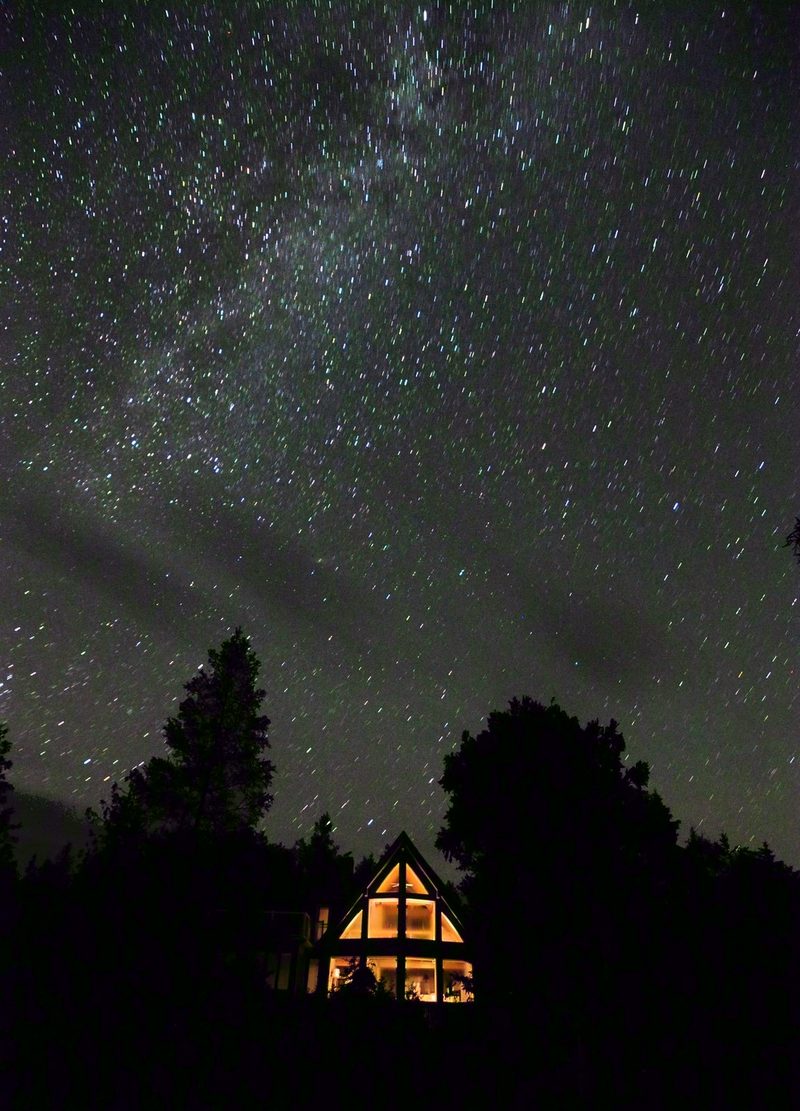
Watching the dark sky
Where to stand when a ban takes the evening away, and the 20 minutes your eyes need once you get there.
Read the guide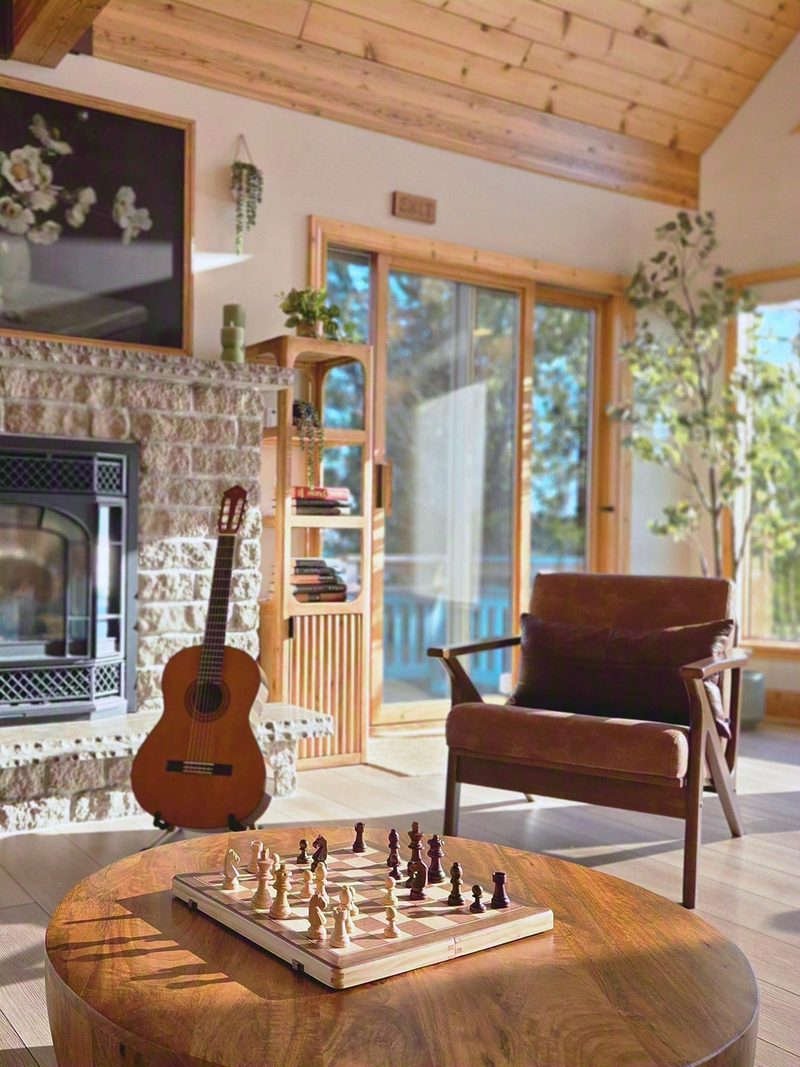
Choosing where to stay
The fire pit in the photographs only counts if the property holds a permit. The rest of the questions to ask before you pay.
Read the guide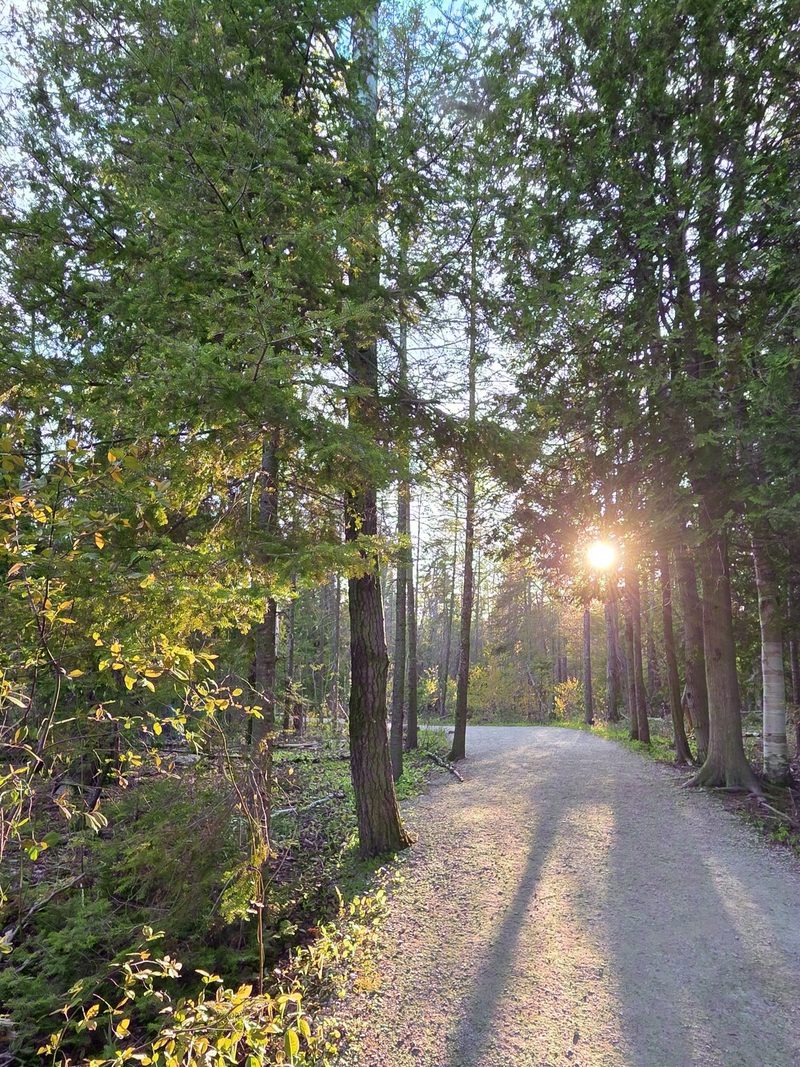
Bruce Trail day hikes
The forest all of these rules protect, in 5 walks, with the access rules for each one.
Read the guide