Area guide · The off season
Winter up here, month by month
Guests planning a first winter trip ask us which month to come. December and March up here have almost nothing in common, and the month you pick shapes the trip more than any other decision you make. Here is what each one actually does, plus the thing all 4 share: from November to April the peninsula stops asking for reservations.
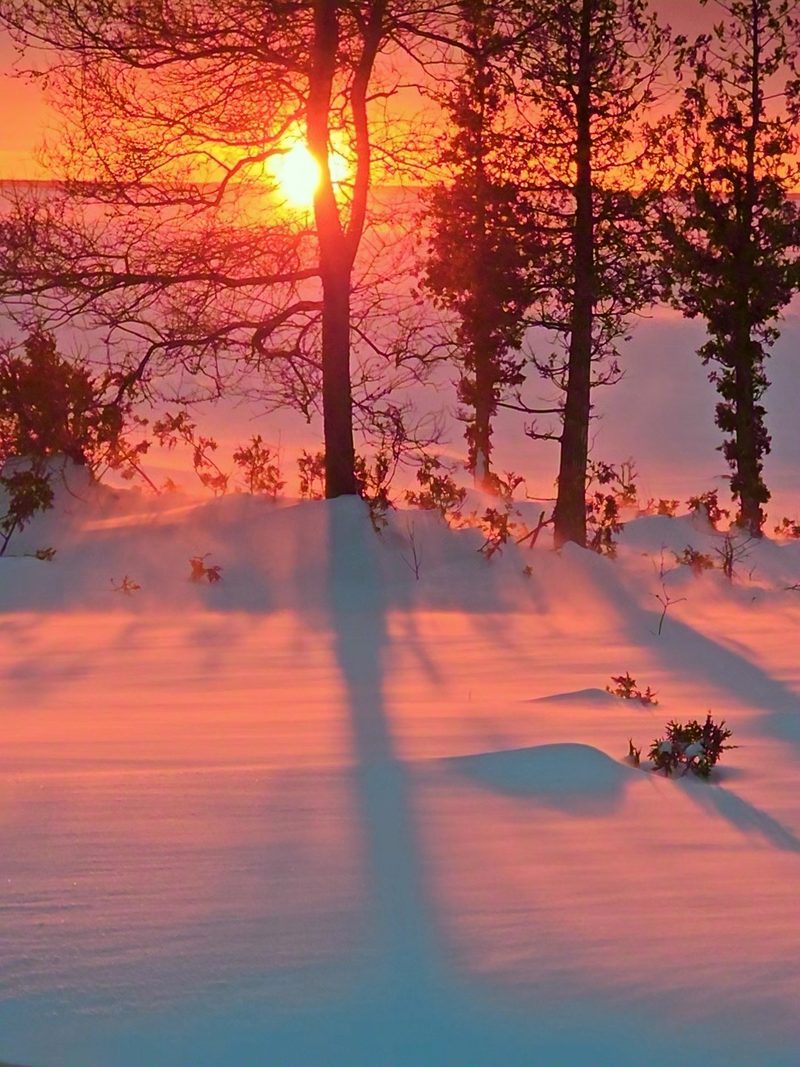
The season nothing needs booking
Every guide we have written for the warm months carries the same warning in different clothes: book the parking, book the slot, book the boat. Winter cancels all of it. The Grotto's reservation system pauses from November to April and you register at the Cyprus Lake office instead, which is the whole subject of our Grotto in winter guide. The paid parking windows at Little Cove and Devil's Monument end in September. The ferry sails away in mid-October. The fire is the one thing winter does not simplify, because the municipality has rules year round and the fire guide is where they live.
The trade is real. Some roads stop being plowed, the tour boats stop running and the village mostly closes, and Tobermory in winter covers what stays open, where to walk and how to handle the drive and the groceries. But nothing up here sells out between November and April, and that changes the shape of a day before you have left the house.
December: the dramatic month
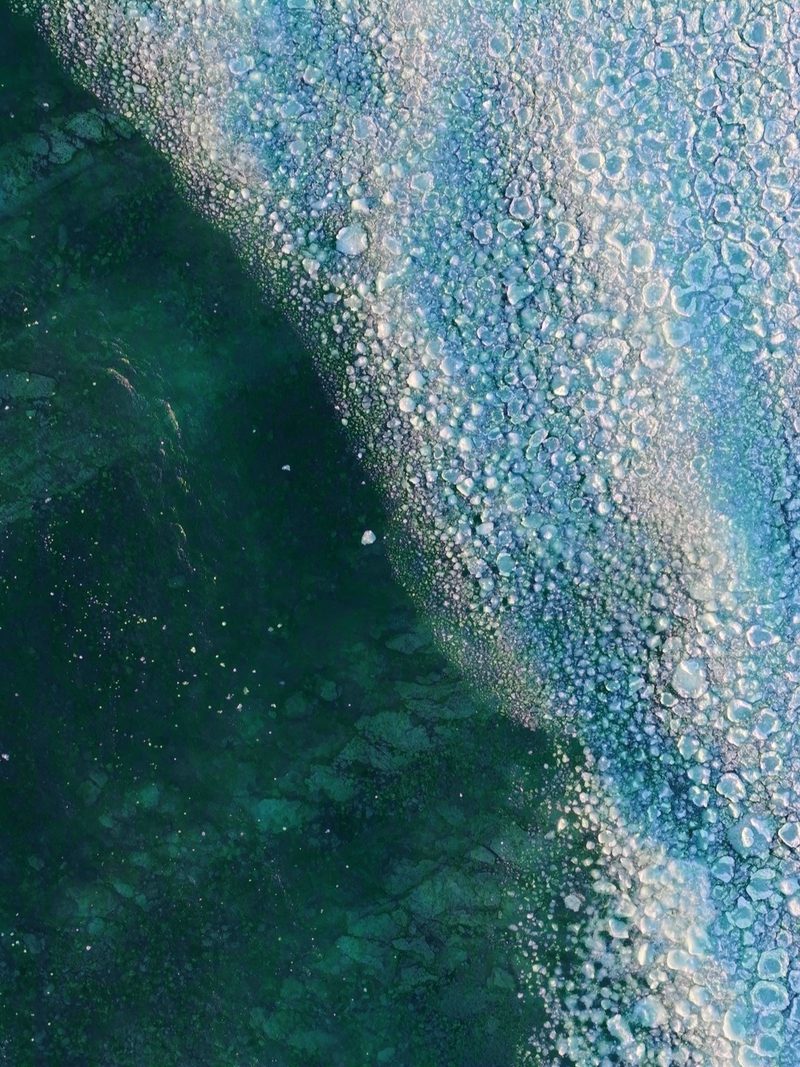
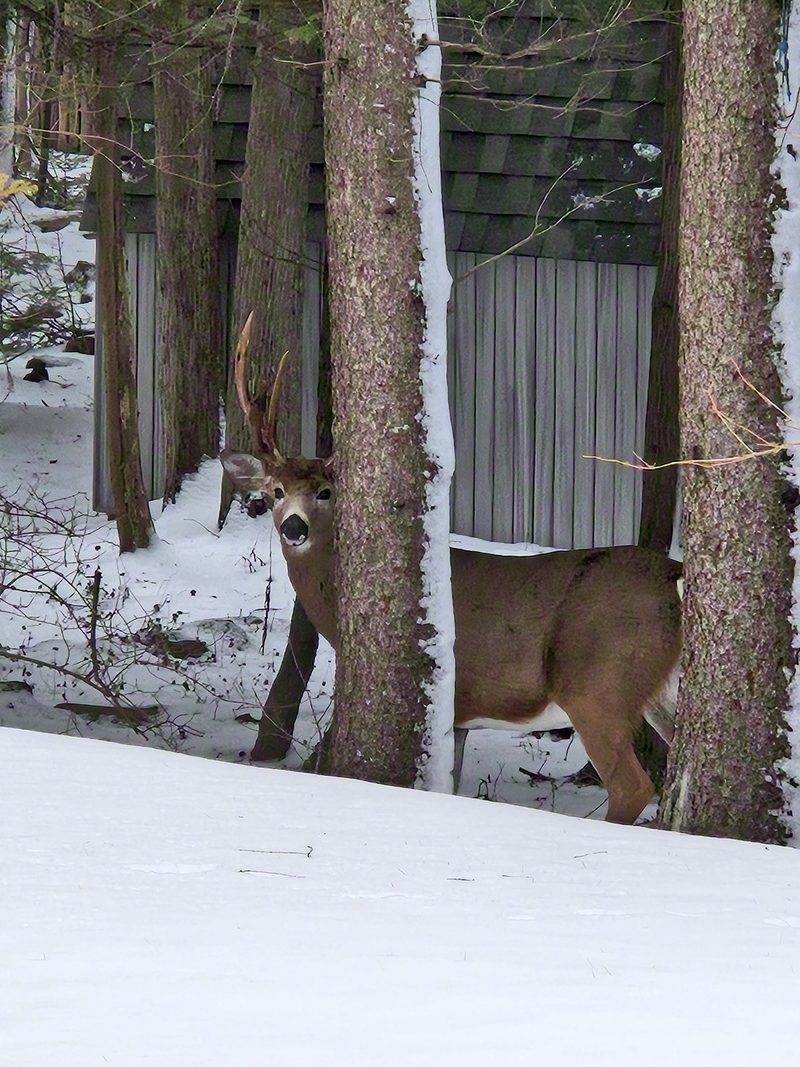
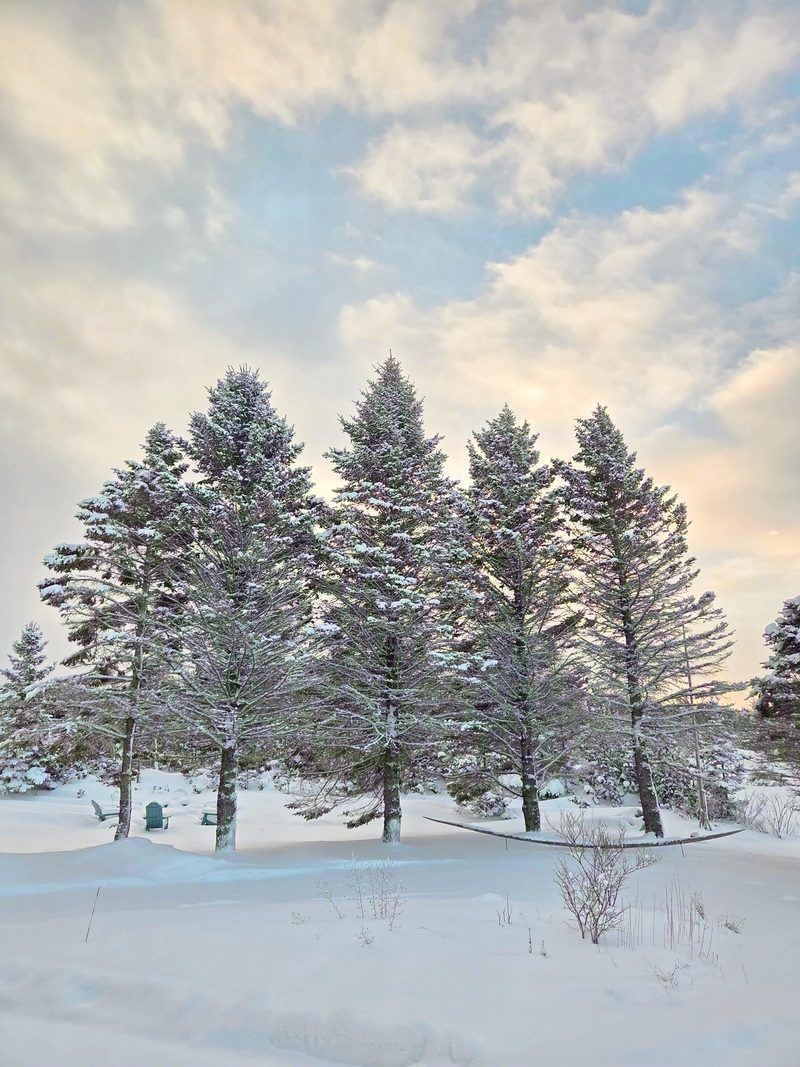
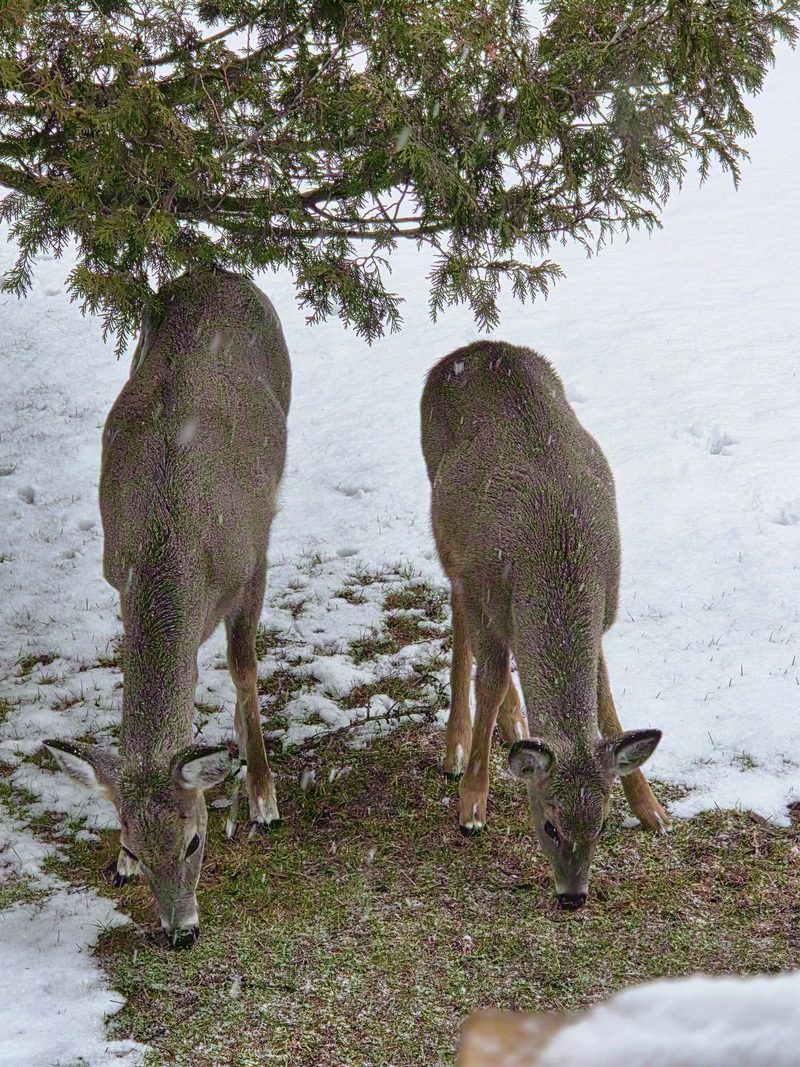
The lake is usually still open water well into the new year, so December is the month of weather rather than ice. Storms cross Lake Huron with nothing in the way, the first real snow lands on green cedar and the deer move in close to the roads and yards in their grey winter coats. The days are at their shortest, with sunset before 5 all month, so a December day holds one outing, finished by early afternoon. What December does best: storm watching, the first snowshoe of the year when the snow cooperates and holiday weeks that feel further from the city than the drive suggests.
January: the lake starts building
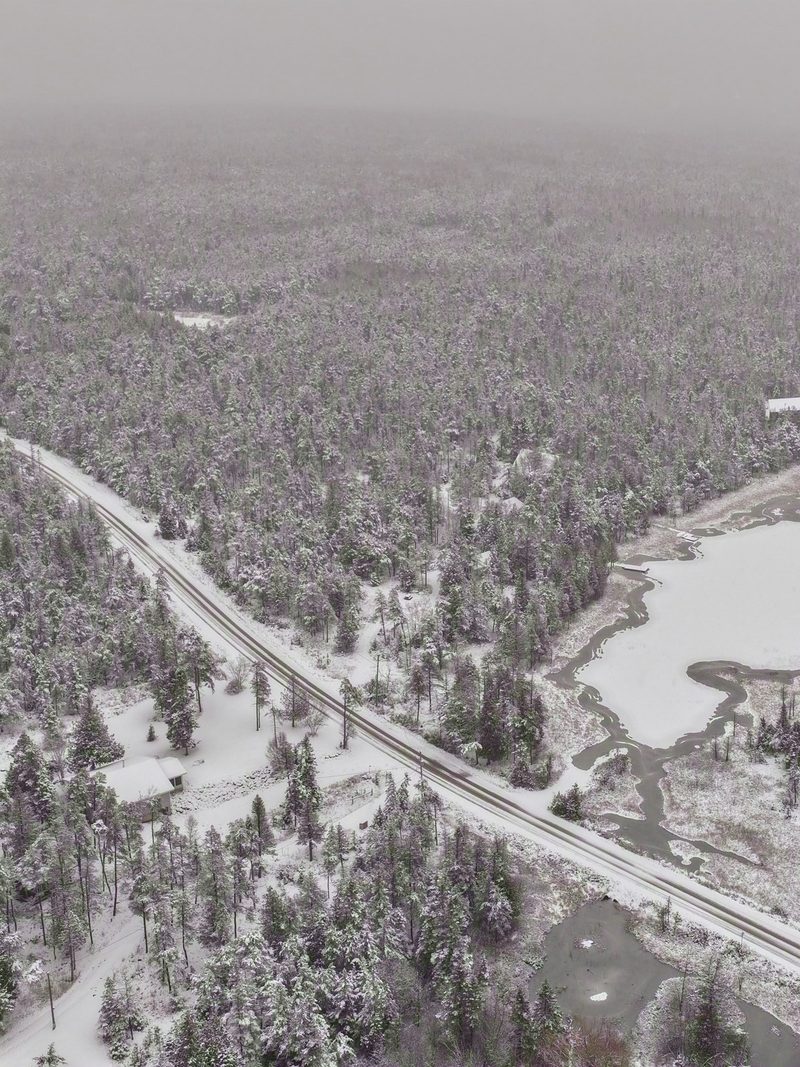
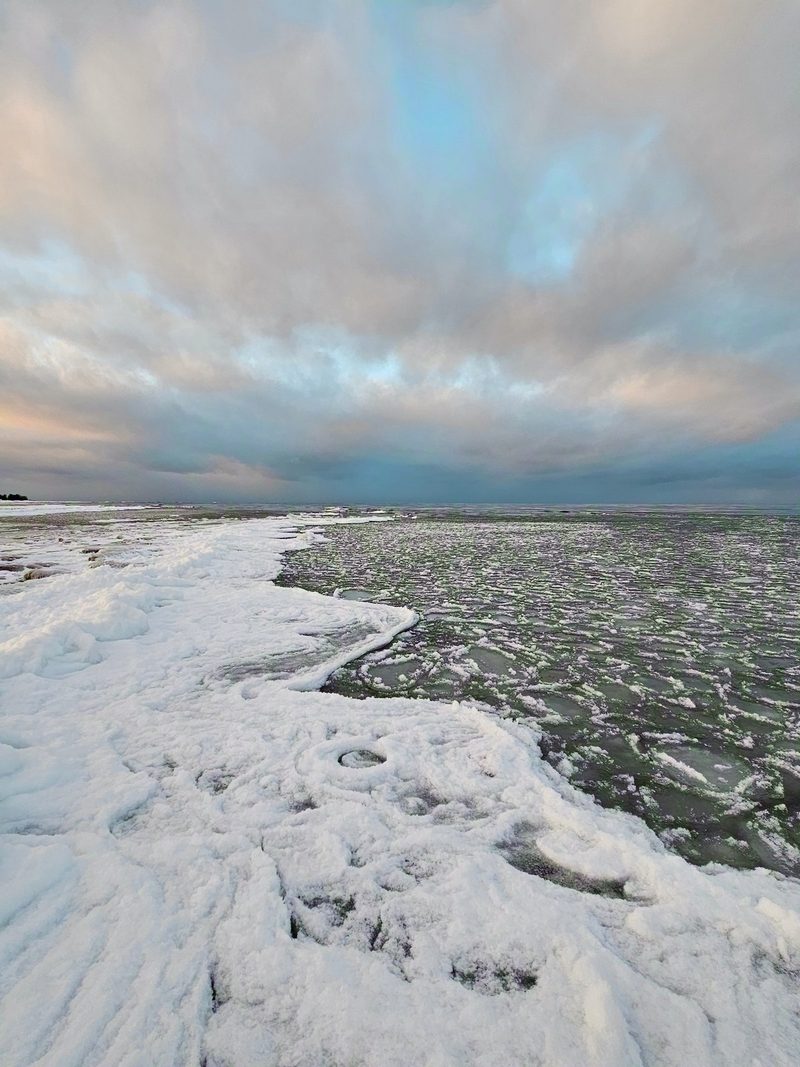
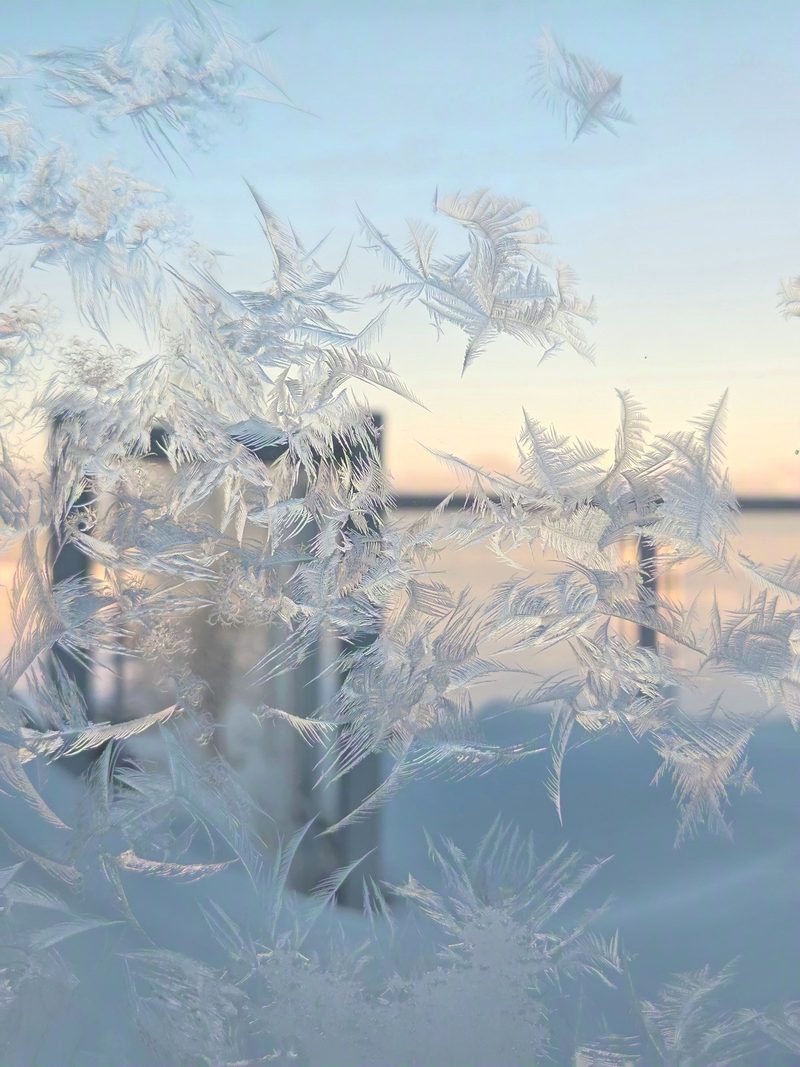
January is when the cold settles in and the ice show begins. Pancake ice rafts up along the shore, the shallow bays lock first and a cold snap will grow frost ferns across window glass overnight. Walk the same stretch of shoreline 2 days running and the sculpture has changed. The rule that carries the whole season is the one from the winter guide: nobody measures the ice for you and nobody should be on it. The photograph is taken from the rock, every time.
The thing to understand before you walk out is the ice shelf. What looks like the shore extending further than usual is a lip of ice built out over open water with nothing underneath it. Waves work at it from below all winter, so the edge is always thinner than the part you are standing on, and a fresh snowfall erases the line where solid ground stops. Shelves let go in slabs, without a crack to warn you, and the water under one is deep and moving. Stay back from any edge you cannot see the bottom of, keep children and dogs off it entirely, and treat the whole white margin between the land and the open water as the lake rather than the shore.
February: the month nobody books
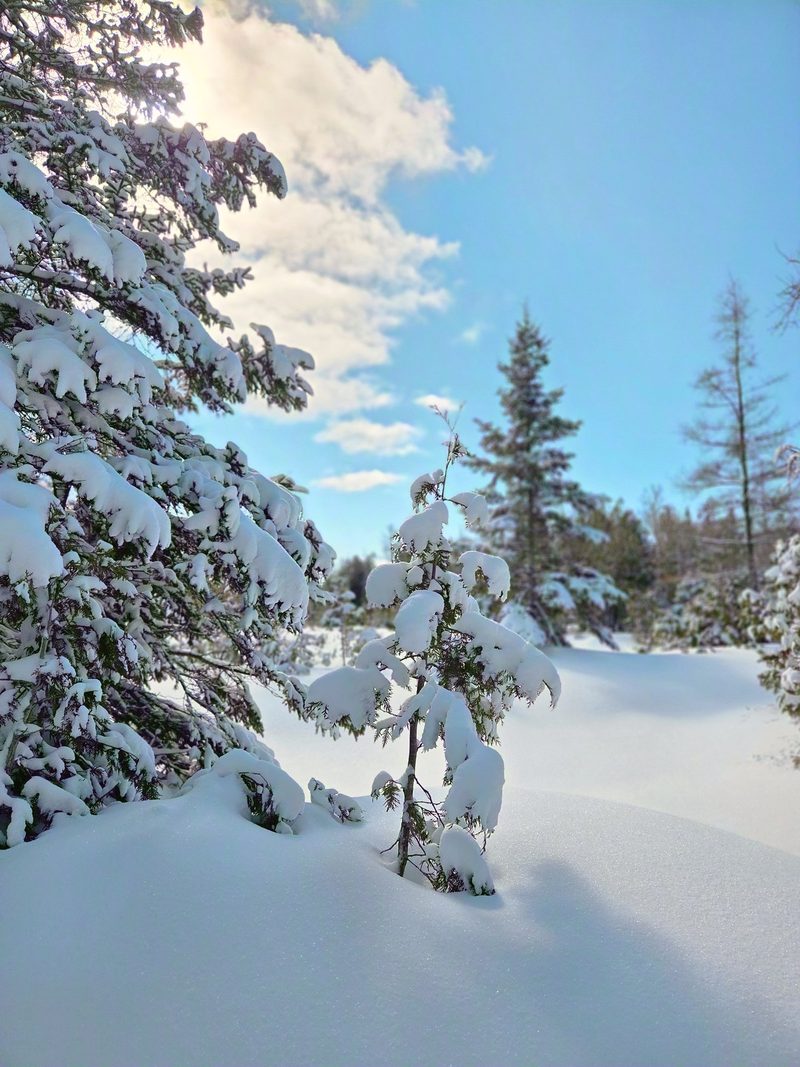
February is the emptiest the peninsula gets. The holiday weeks are over, March break has not started and the roads belong to the people who live here. It is also the deep of it. The snowpack peaks, the sun starts carrying some strength again and a hard blue February day after a January of grey feels like a different country.
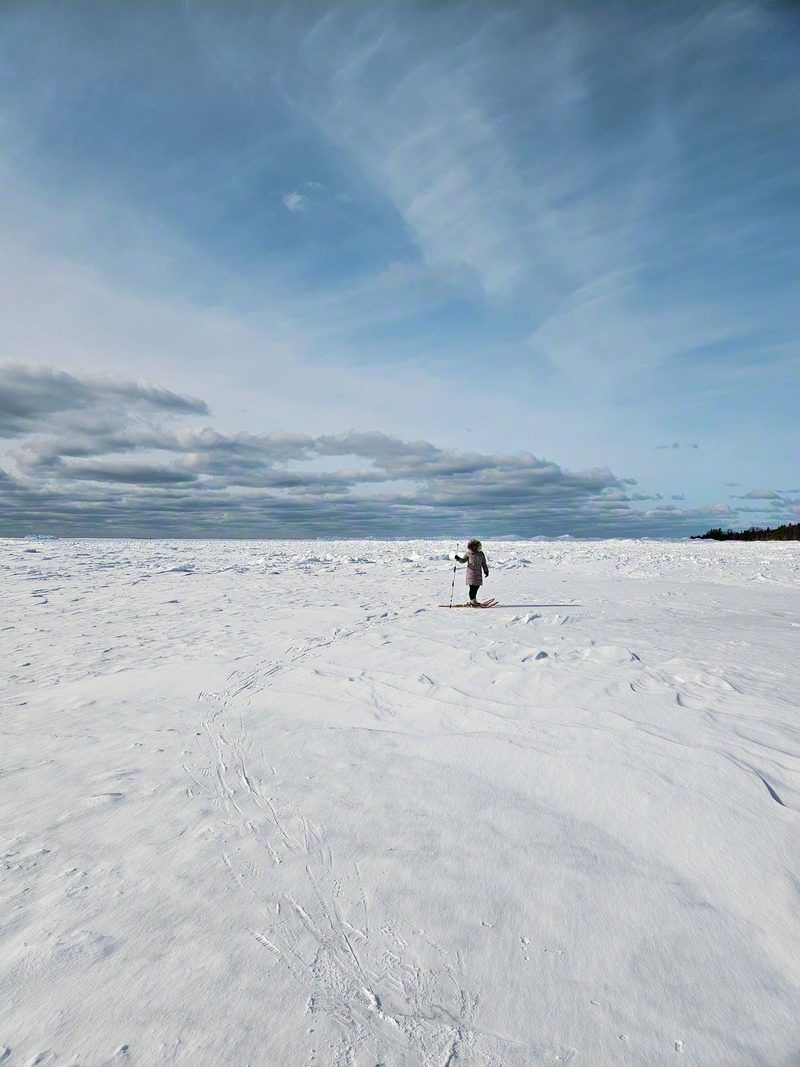
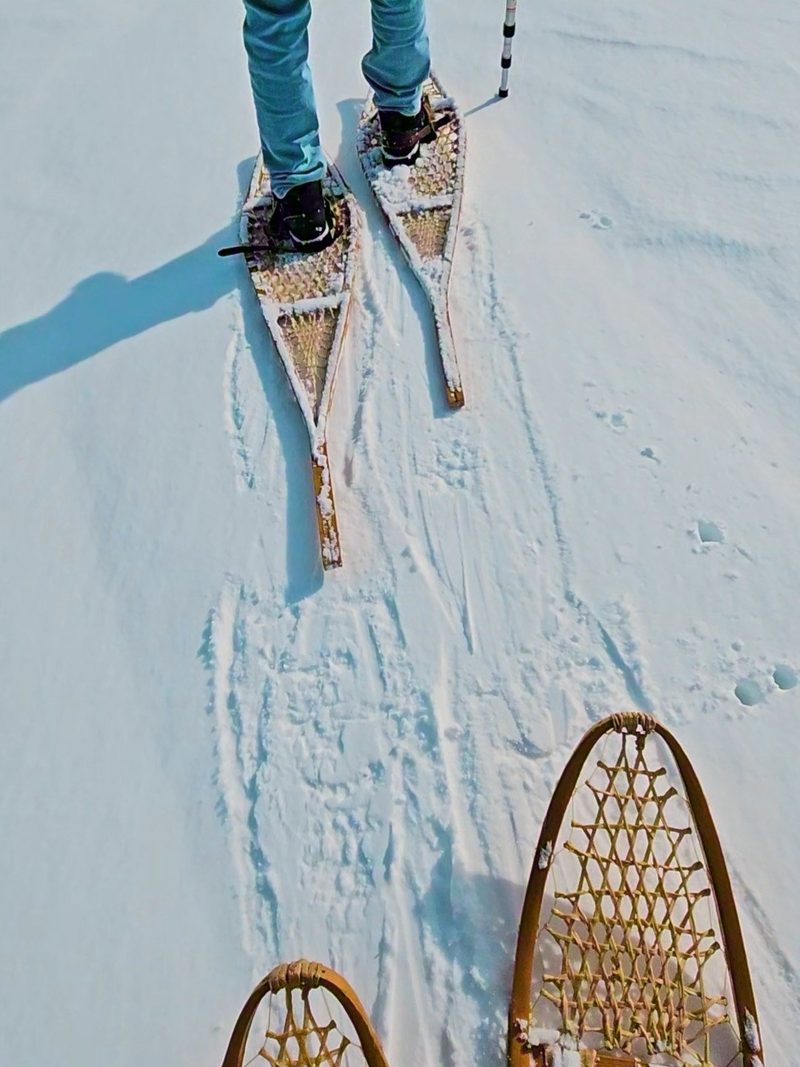
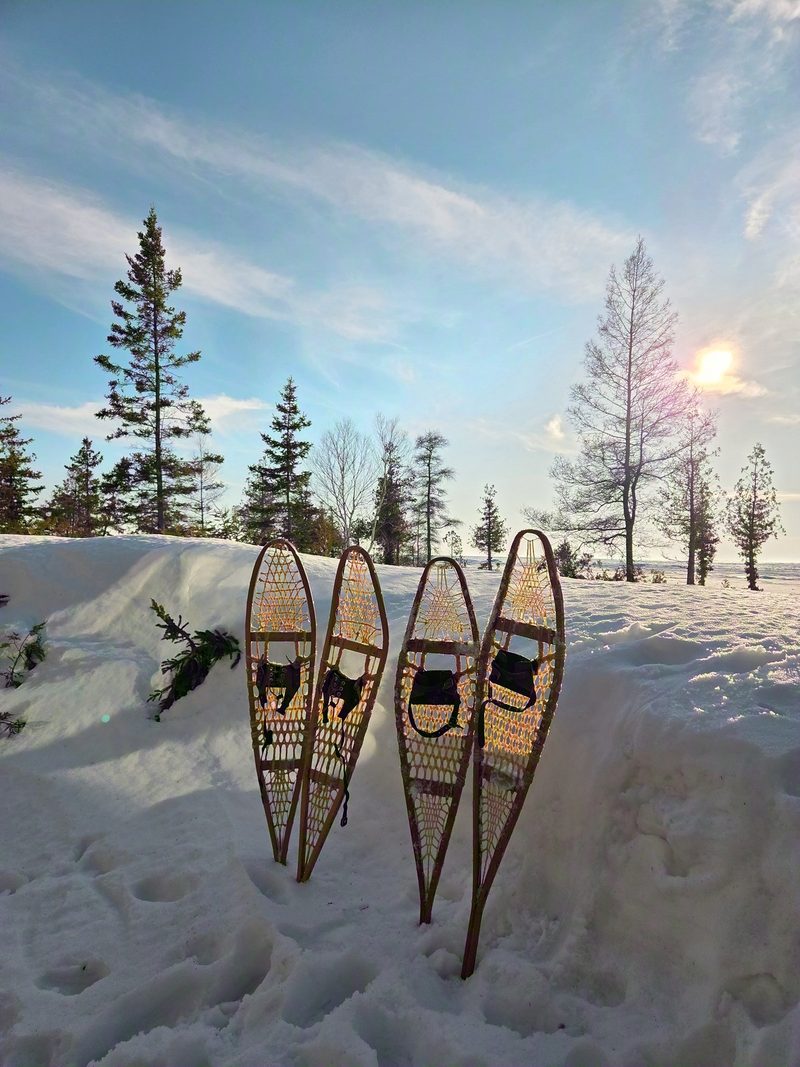
This is the snowshoe month, and snowshoeing is the most underrated thing a visitor can do up here, mostly because there is nothing to learn. It is walking with bigger feet: 5 minutes of adjustment, no technique and no fitness barrier beyond an ordinary walk. You do not need a trail either. A field, a shoreline or a road the plow ignores is the route, and the silence 10 minutes in is the part people mention afterward. In February you can walk all of it without meeting anybody, which is the whole argument for coming now rather than in July.
March: the one we would argue for
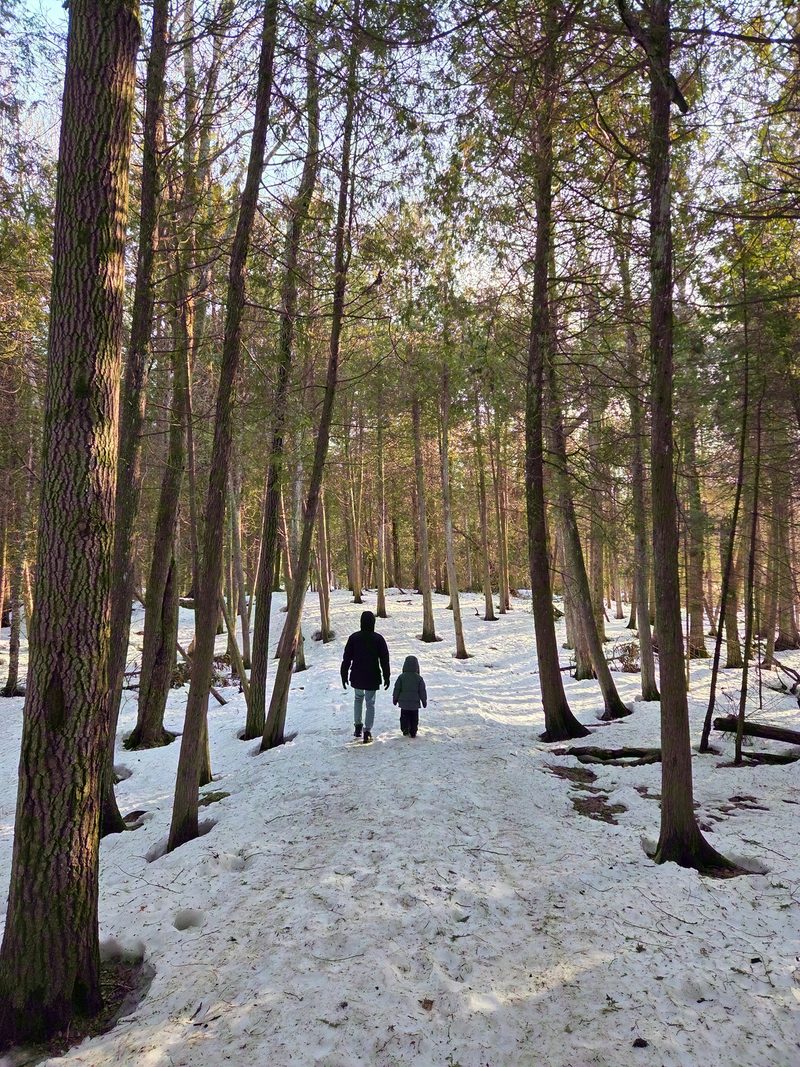
March is the sleeper. The sun is properly strong, the days pass 12 hours at the equinox and the evening opens right up: sunset is quarter past 6 on March 1 and close to 8 by the 31st. An hour of that arrives in a single night when the clocks go forward, and the rest the month earns on its own. Either way the daily outing stops racing the dark. The snow holds far later than southern visitors expect, with deep drifts past the 21st in a normal year, but it settles and firms, which makes the easiest walking of the winter. South-facing forest floor starts to open, the deer come out to the first bare grass and the peninsula is bright and quiet at once. If what you want is the look of winter without the teeth of it, March is your month.
What fills the days between the famous stops
- Snowshoe from wherever you are. The best route is usually the shoreline or field you are already on, not a drive away. Ask your host whether snowshoes come with the cottage before you rent a set.
- Walk the shore and watch the ice edge. Where open water meets the shelf changes daily and it is the best free show of the season. From the rock, and back from the edge, as above.
- Read the fresh snow. An overnight fall prints the night's traffic by morning: deer, fox, squirrel and rabbit, and following one line of tracks to wherever it goes fills more of a morning than you would expect.
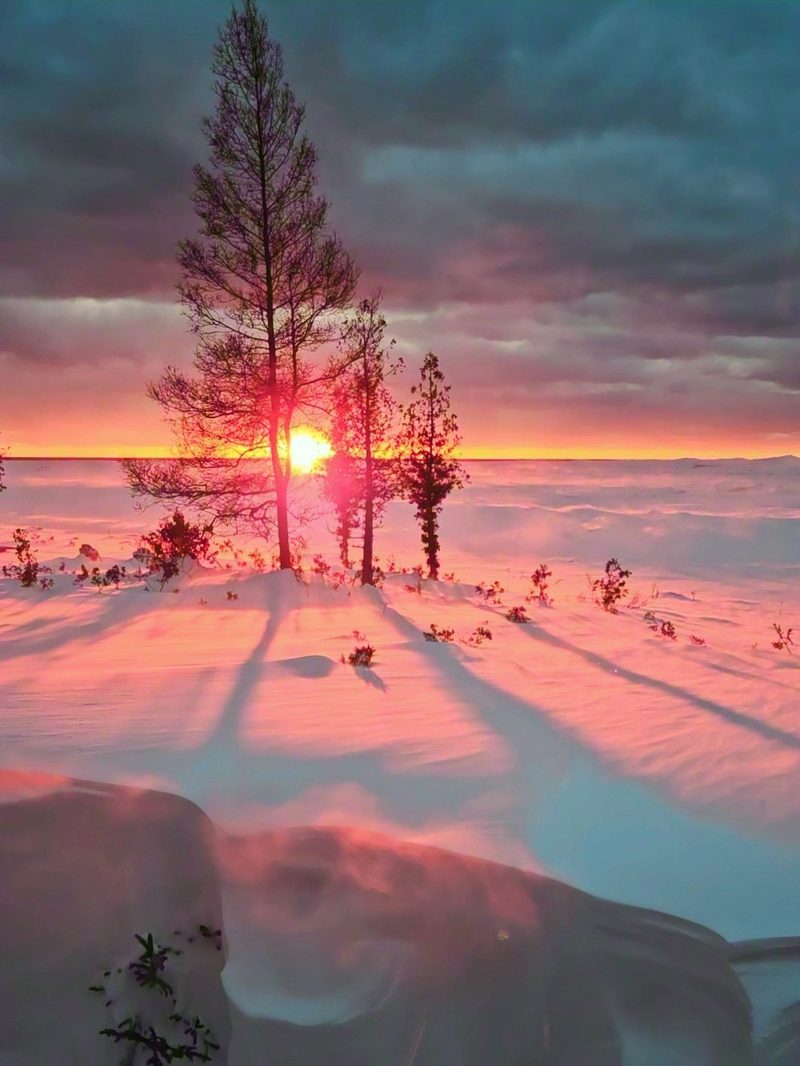
- Keep the sunset appointment. It happens at walking-around hours all winter, and the sky that follows 40 minutes later is the one the dark sky guide calls the clearest of the year.
- Light a fire in falling snow. It is a better version of the same evening, the crowds that come with a summer fire ban are not here, and the rules in the fire guide still apply. The wood still gets bought locally.
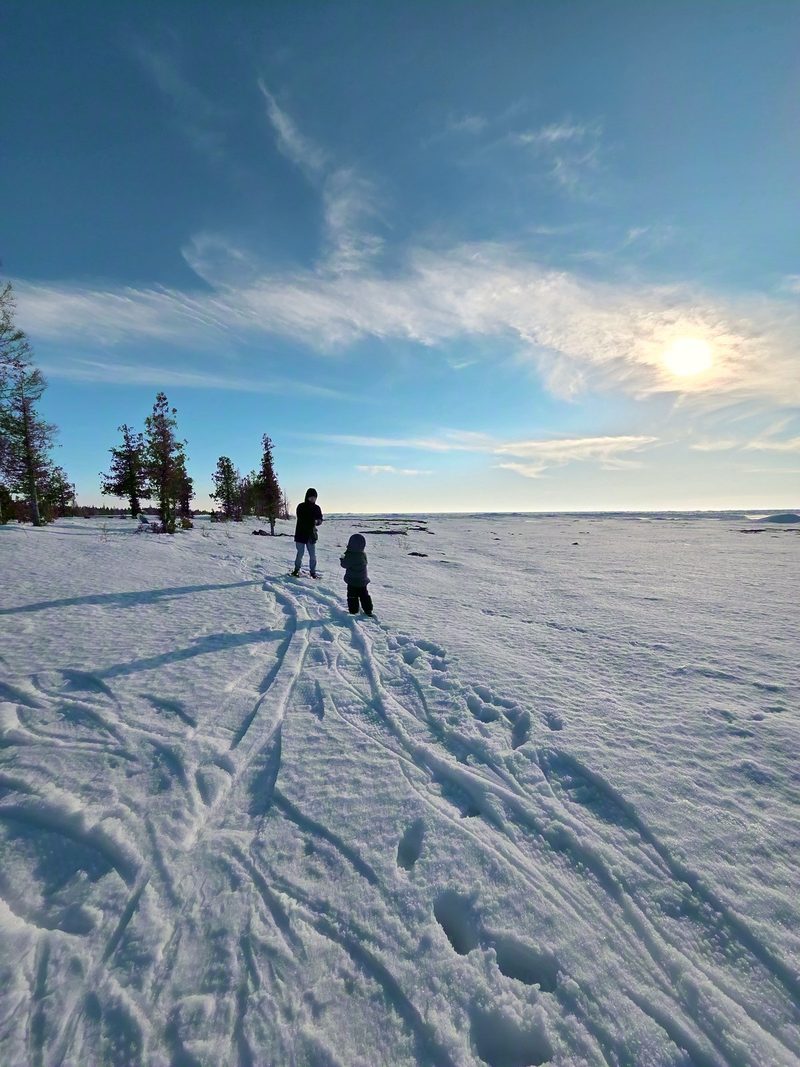
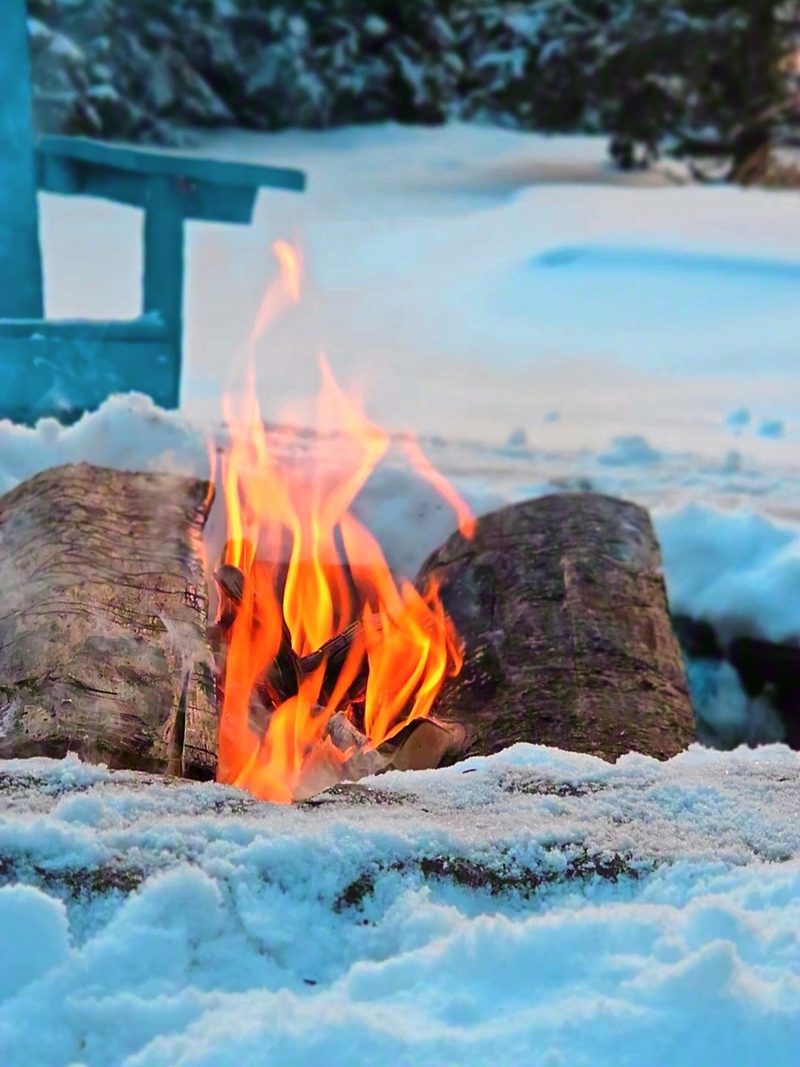
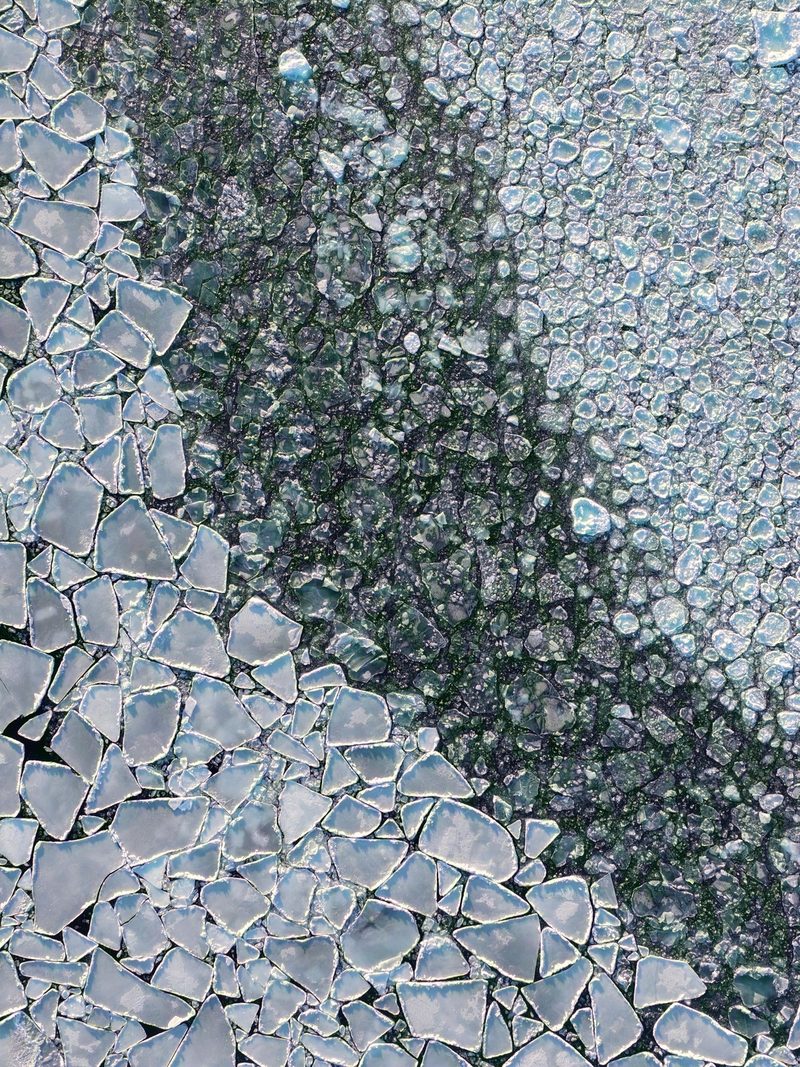
The photographs on this page come from 2 recent winters, the end of November through late March. That span is the point: the season is long, it is really 4 seasons and not one of them requires a reservation. Pick your month, and the rest of the planning is mostly groceries.
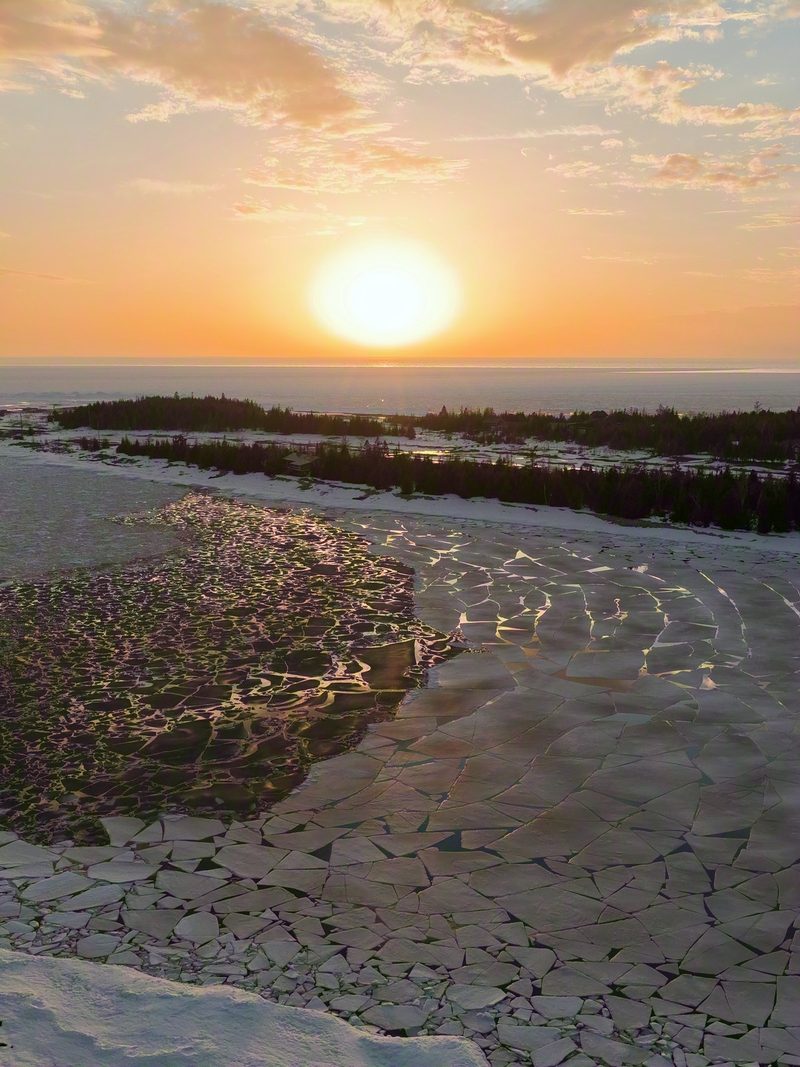
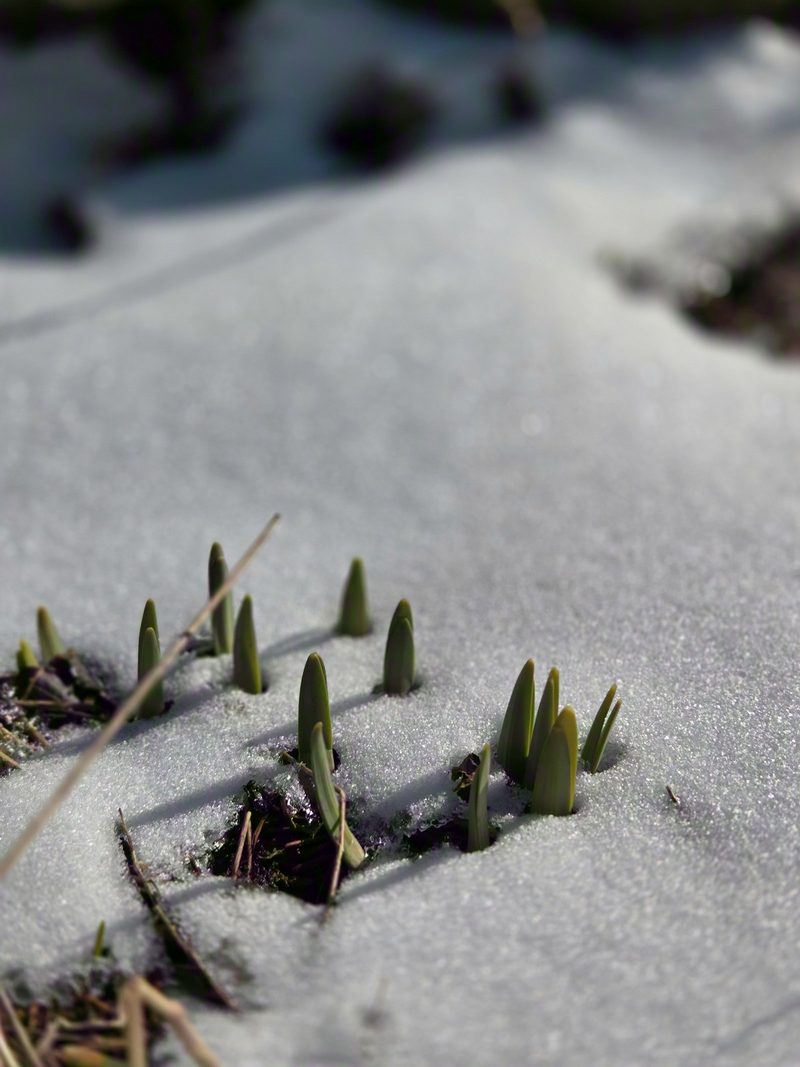
We live here through all 4 of these months and every photograph on this page is ours.
Keep planning
Where to go next
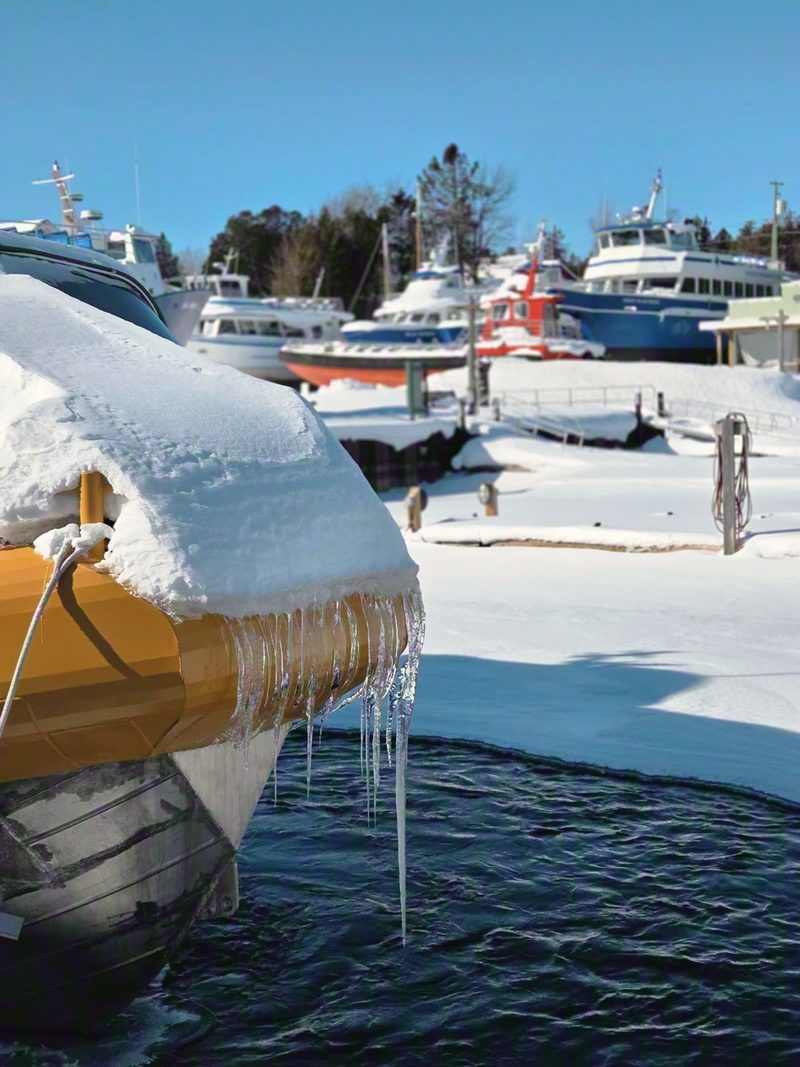
Tobermory in winter
What closes in the village, what stays open, ice safety and how to plan the drive and the groceries.
Read the guide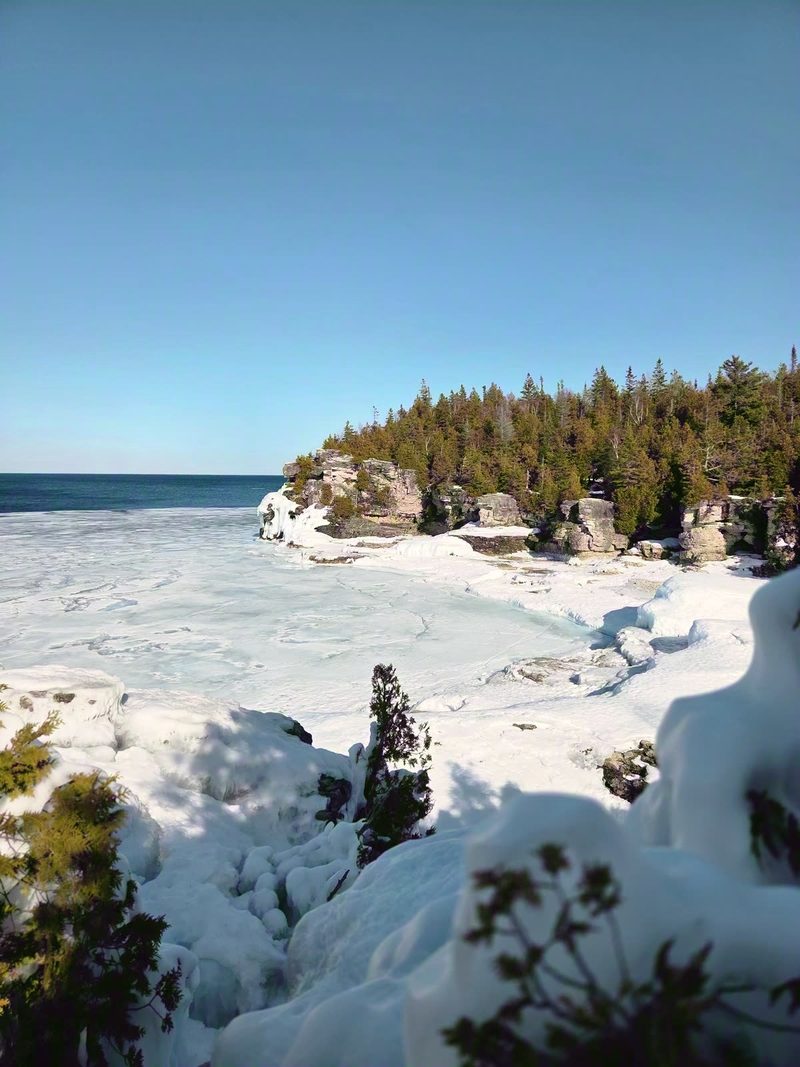
The Grotto and Indian Head Cove in winter
The reservation system pauses from November. How the off-season registration works and what the frozen cove is like.
Read the guide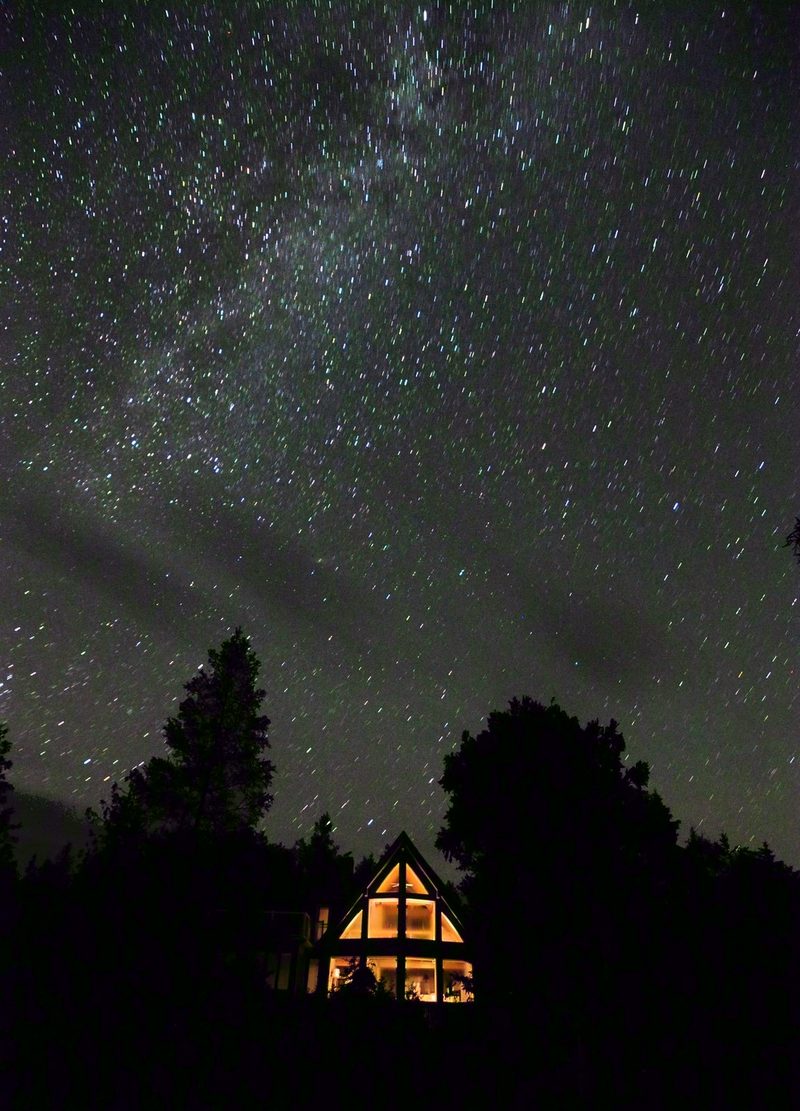
Watching the dark sky
Where to stand, how the moon decides your night, why a full moon is its own event and what an aurora really takes this far south.
Read the guide